

by Jack Newman, MD, FRCPC
Introduction
The best treatment of sore nipples is prevention. The best prevention is latching the baby on properly from the first day.
Sore nipples are usually due to one or both of two causes. Either the baby is not positioned and latched properly, or the baby is not suckling properly, or both. Incidentally, babies learn to suck properly by getting milk from the breast when they are latched on well. (They learn by doing).
Fungal infection (due to Candida albicans), may also cause sore nipples. The soreness caused by poor latching and ineffective suckle hurts most as you latch the baby on and usually improves as the baby nurses. The pain from the fungal infection goes on throughout the feed and may continue even after the feed is over. Women describe knifelike pain from the first two causes. The pain of the fungal infection is often described as burning, but may not have this character. Sudden, unexplained onset of nipple pain when feedings had previously been painless is a tipoff that the pain may be due to a yeast infection, but the pain may come on gradually or may be superimposed on pain due to other causes. Cracks may be due to a yeast infection.
Proper Positioning and Latching
It is not uncommon for women to experience difficulty positioning and latching the baby on. Proper positioning facilitates a good latch and good latching reduces the baby's chances of becoming "gassy," and also allows the baby to control the flow of milk. Thus, poor latching may also result in the baby not gaining adequately, or feeding frequently, or being colicky (handout #2 Colic in the Breastfed Baby).
Positioning
For the purposes of explanation, let us assume that you are feeding on the left breast.
Good positioning facilitates a good latch. A lot of what follows under latching comes automatically if the baby is well positioned in the first place.
At first, it may be easiest to use the cross cradle hold to position your baby for latching on. Hold the baby in your right arm, the web between your thumb and index finger behind the nape of his neck (not behind his head) with your fingers (except for the thumb) supporting the baby's face from underneath, and your forearm supporting his back and buttocks. Hold the baby's buttocks between your chest and your forearm-this should give you good control. The baby should be almost horizontal across your body and should be turned so that his chest, belly, and thighs are against you with a slight tilt so the baby can look at you. Hold the breast with your left hand, with the thumb on top and the other fingers underneath, fairly far back from the nipple and areola.
The baby should be approaching the breast with the head just slightly tilted backwards. The nipple then automatically points to the roof of the baby's mouth. (See handout on positioning and latching on)

Latching
Now, get the baby to open up his mouth wide. The way to do this is to run your nipple, still pointing to the roof of the baby's mouth, along the baby's mouth, very lightly, from one corner of the mouth to the other. Or you can run the baby along your nipple, something some mothers find easier. Wait for the baby to open up as if yawning. WAIT FOR HIM. As you bring the baby toward the breast, his chin should touch your breast first.
When the baby opens up his mouth, use the arm that is holding him to bring him onto the breast. Don't worry about the baby's breathing. If he is properly positioned and latched on, he will breathe without any problem. If he cannot breathe, he will pull away from the breast. Don't be afraid to be vigorous.
If the nipple still hurts, use your index finger to pull down on the baby's chin in order to bring the lower lip out. You may have to do this for the duration of the feed, but this is usually not necessary.
The same principles apply whether you are sitting or lying down with the baby or using the football hold. Get the baby to open wide, don't let the baby latch onto the nipple, but get as much of the areola (brown part of breast) into the mouth as possible (not necessarily the whole areola).
There is no "normal" length of feeding time. If you have questions, call the clinic. A baby properly latched on will be covering more of the areola with his lower lip than with the upper lip.
Improving the Baby's Suckle
The baby learns to suckle properly by nursing and by getting milk into his mouth. The baby's suckle may be made ineffective or not appropriate for breastfeeding by the early use of artificial nipples or from poor latching on from the beginning. Some babies just seem to take their time developing an effective suckle. Suck training and/or finger feeding (handout #8 Finger Feeding) may help.
"My Nipple Turns White After the Baby Feeds"
The pain associated with this blanching of the nipple is frequently described by mothers as "burning", but generally begins only after the feeding is over. It may last several minutes or more, after which the nipple returns to its normal colour, but then a new pain develops which is usually described by mothers as "throbbing". The throbbing part of the pain may last for seconds or minutes and may even blanch again. The cause would seem to be a spasm of the blood vessels in the nipple (when the nipple is white), followed by relaxation of these blood vessels (when the nipple returns to its normal colour). Sometimes this pain continues even after the nipple pain during the feeding no longer is a problem, so that the mother has pain only after the feeding, but not during it. What can be done?
Pay careful attention to getting the baby to latch onto the breast properly. This type of pain is almost always associated with, and probably caused by whatever is causing your pain during the feeding. The best treatment is the treatment of the other causes of nipple pain.
Heat (hot washcloth, hot water bottle, hair dryer) applied to the nipple immediately after nursing may prevent or decrease the reaction. Dry heat is usually better than wet heat, because wet heat may cause further damage to the nipples.
On occasion, we have had to use a medicated paste (nitroglycerine) or an oral medication (nifedipine) to prevent this type of reaction.
General Measures
- Nipples can be warmed for short periods of time after each feeding, using a hair dryer on low setting.
- Nipples should be exposed to air as much as possible.
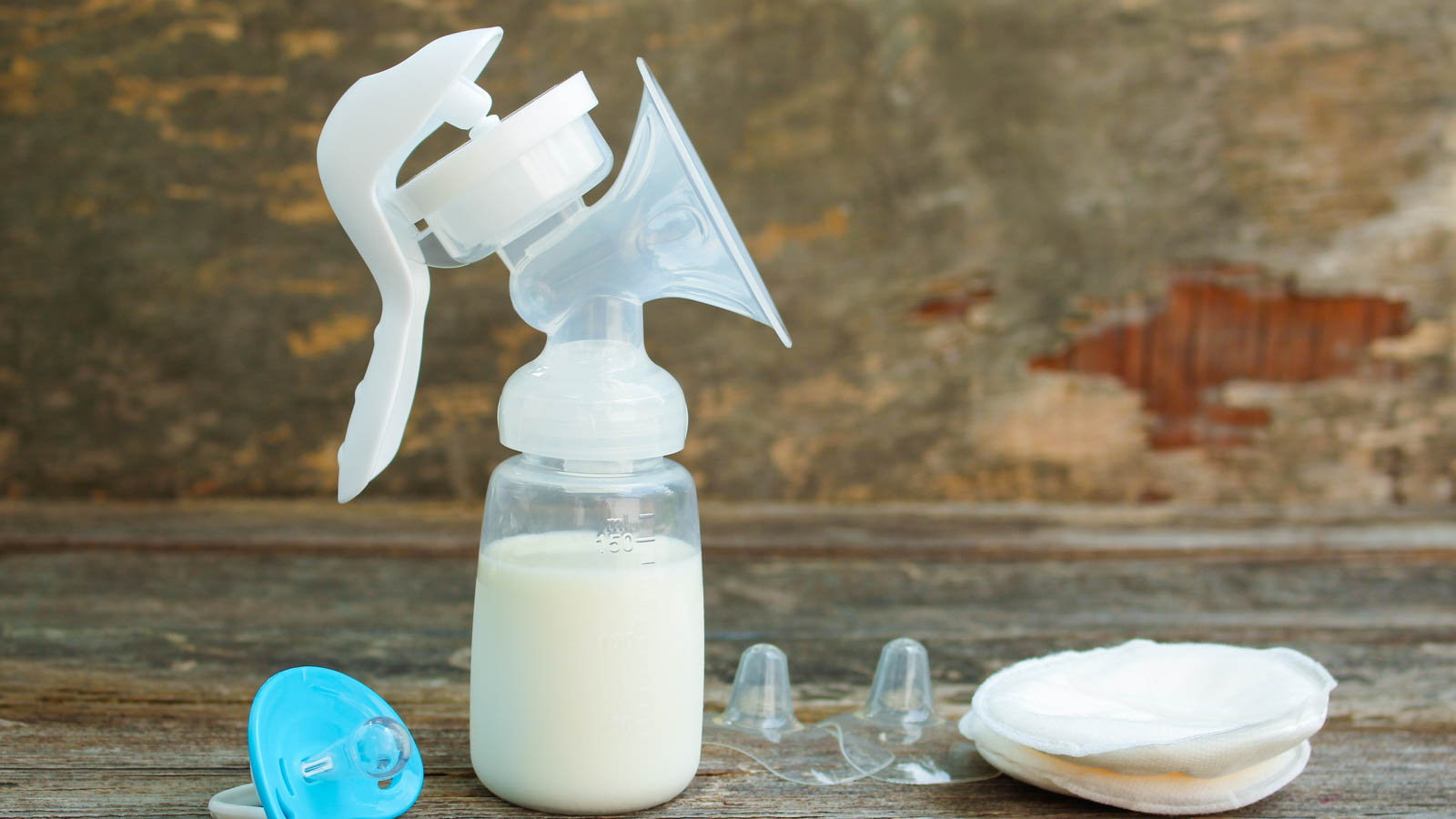
- When it is not possible to expose nipples to air, plastic dome-shaped breast shells (not nipple shields) can be worn to protect your nipples from rubbing by your clothing. Nursing pads keep moisture against the nipple and may cause damage that way. They also tend to stick to damaged nipples. If you leak a lot you can wear the pad over the breast shell.
- Ointments can sometimes be helpful. If you do use an ointment, use just a very small amount after nursing and do not wash it off.
- Do not wash your nipples frequently. Daily bathing is more than enough.
- A Lactation Aid can be used to supplement (preferably expressed milk), so that the baby will finish the feeding on the first side.
Nipple shields are not recommended for sore nipples, because, although they may help temporarily, they usually do not. They may also cut down the milk supply dramatically, and the baby may become fussy and not gain weight well. Once the baby is used to them, it may be impossible to get the baby back onto the breast. In fact, many women who have tried nipple shields find that they do not help with soreness. Use as a last resort only, but get help first.
Handout #3 Sore nipples. Revised January 1998
Jack Newman, MD, FRCPC is a pediatrician, a graduate of the University of Toronto medical school. He started the first hospital-based breastfeeding clinic in Canada in 1984. He has been a consultant with UNICEF for the Baby Friendly Hospital Initiative in Africa. Dr. Newman has practiced as a physician in Canada, New Zealand, and South Africa.
This article may be copied and distributed without further permission.