
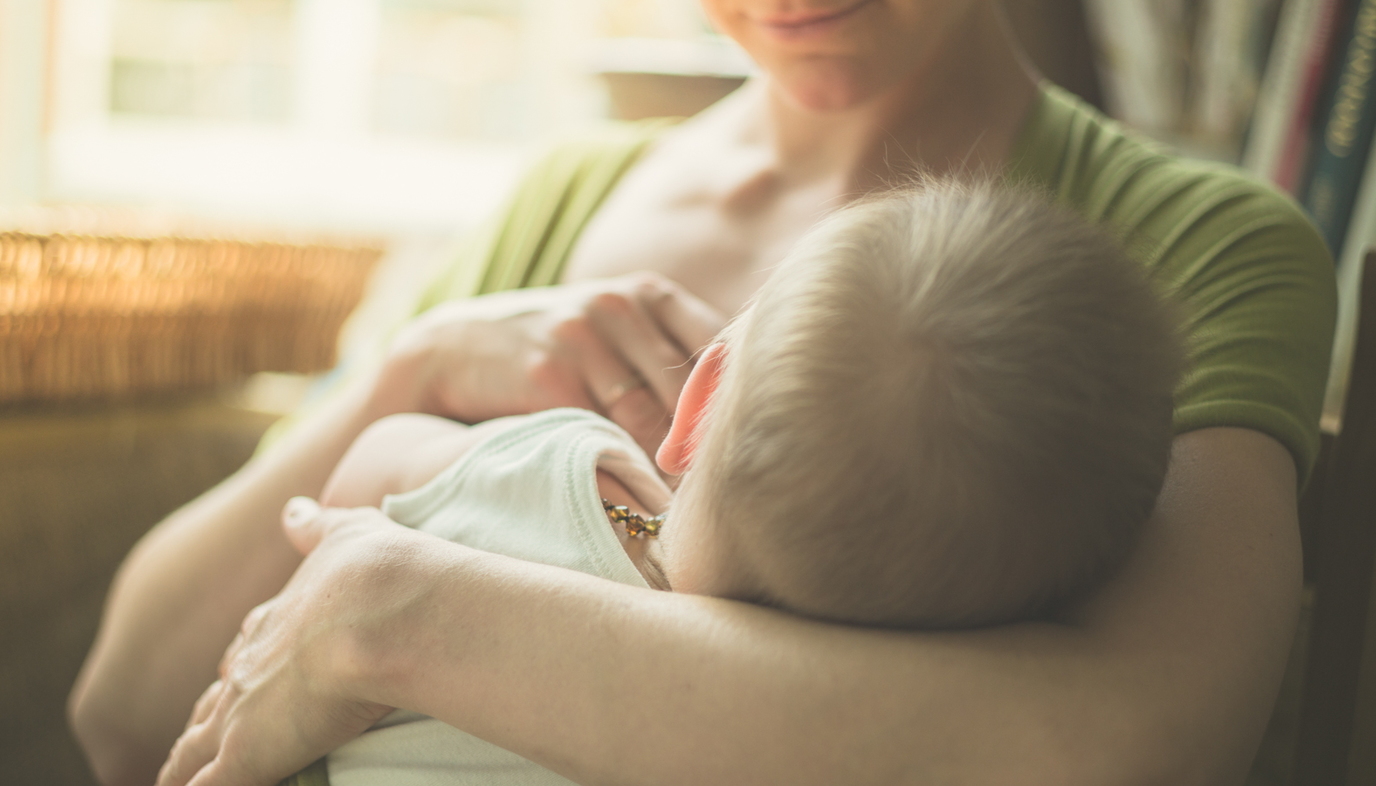
Because more and more women are now breastfeeding their babies, more and more are also finding that they enjoy breastfeeding enough to want to continue longer than the usual few months they initially thought they would do it. UNICEF has long encouraged breastfeeding for two years and longer, and the American Academy of Pediatrics is now on record as encouraging mothers to nurse at least one year and as long after as both mother and baby desire. Breastfeeding to 3 and 4 years of age has been common in much of the world until recently, and breastfeeding toddlers is still common in many societies.
Why Should Breastfeeding Continue Past Six Months?
Because mothers and babies often enjoy breastfeeding a lot. Why stop an enjoyable relationship?
But it is said that breastmilk has no value after six months.
Perhaps this is said, but it is wrong. That anyone can say such a thing only shows how ignorant so many people in our society are about breastfeeding. Breastmilk is, after all, milk. Even after six months, it still contains protein, fat, and other nutritionally important and appropriate elements which babies and children need. Breastmilk still contains immunologic factors which help protect the baby. In fact, some immune factors in breastmilk which protect the baby against infection are present in greater amounts in the second year of life than in the first. This is, of course as it should be, since children older than a year are generally exposed to more infection. Breastmilk still contains factors which help the immune system to mature, and which help the brain, gut, and other organs to develop and mature.
It has been well shown that children in daycare who are still breastfeeding have far fewer and less severe infections than the children who are not breastfeeding. The mother thus loses less work time if she continues nursing her baby once she is back at her paid work.
It is interesting that formula company marketing pushes the use of formula (a rather imperfect copy of the real thing) for a year, yet implies that breastmilk (from which the imperfect copy is copied) is only worthwhile for 6 months. Too many health professionals have taken up the refrain.

I have heard that the immunologic factors prevent the baby from developing his own immunity if I breastfeed past six months.
This is untrue; in fact, this is absurd. It is unbelievable how so many people in our society twist around the advantages of breastfeeding and turn them into disadvantages. We give babies immunizations so that they are able to defend themselves against the real infection. Breastmilk also allows the baby to be fight off infections. When the baby fights off these infections, he becomes immune, naturally.
But I want my baby to become independent.
And breastfeeding makes the toddler dependent? Don't believe it. The child who breastfeeds until he weans himself (usually from 2 to 4 years), is generally more independent, and, perhaps more importantly, more secure in his independence. He has received comfort and security from the breast, until he is ready to make the step himself to stop. And when he makes that step himself, he knows he has achieved something, he knows he has moved ahead. It is a milestone in his life.
Often we push children to become "independent" too quickly. To sleep alone too soon, to wean from the breast too soon, to do without their parents too soon, to do everything too soon. Don't push and the child will become independent soon enough. What's the rush? Soon enough, they will be leaving home.
Of course, breastfeeding can, in some situations, be used to foster an overdependent relationship. But so can food and toilet training. The problem is not the breastfeeding. This is another issue.

What Else?
Possibly the most important aspect of nursing a toddler is not the nutritional or immunologic benefits, important as they are. I believe the most important aspect of nursing a toddler is the special relationship between child and mother. Breastfeeding is a life-affirming act of love. This continues when the baby becomes a toddler. Anyone without prejudices, who has ever observed an older baby or toddler nursing can testify that there is something almost magical, something special, something far beyond food going on. A nursing toddler will sometimes spontaneously break into laughter for no obvious reason. His delight in the breast goes far beyond a source of food. And if the mother allows herself, breastfeeding becomes a source of delight for her as well, far beyond the pleasure of providing food. Of course, it's not always great, but what is? But when it is, it makes it all so worthwhile.
And if the child does become ill or does get hurt (and they do as they meet other children and become more daring), what easier way to comfort the child than breastfeeding? I remember nights in the emergency department when mothers would walk their ill, non nursing babies or toddlers up and down the halls trying, often unsuccessfully, to console them, while the nursing mothers were sitting quietly with their comforted, if not necessarily happy, babies at the breast. The mother comforts the sick child with breastfeeding, and the child comforts the mother by breastfeeding.
Handout #21. Toddler nursing. January 1998