
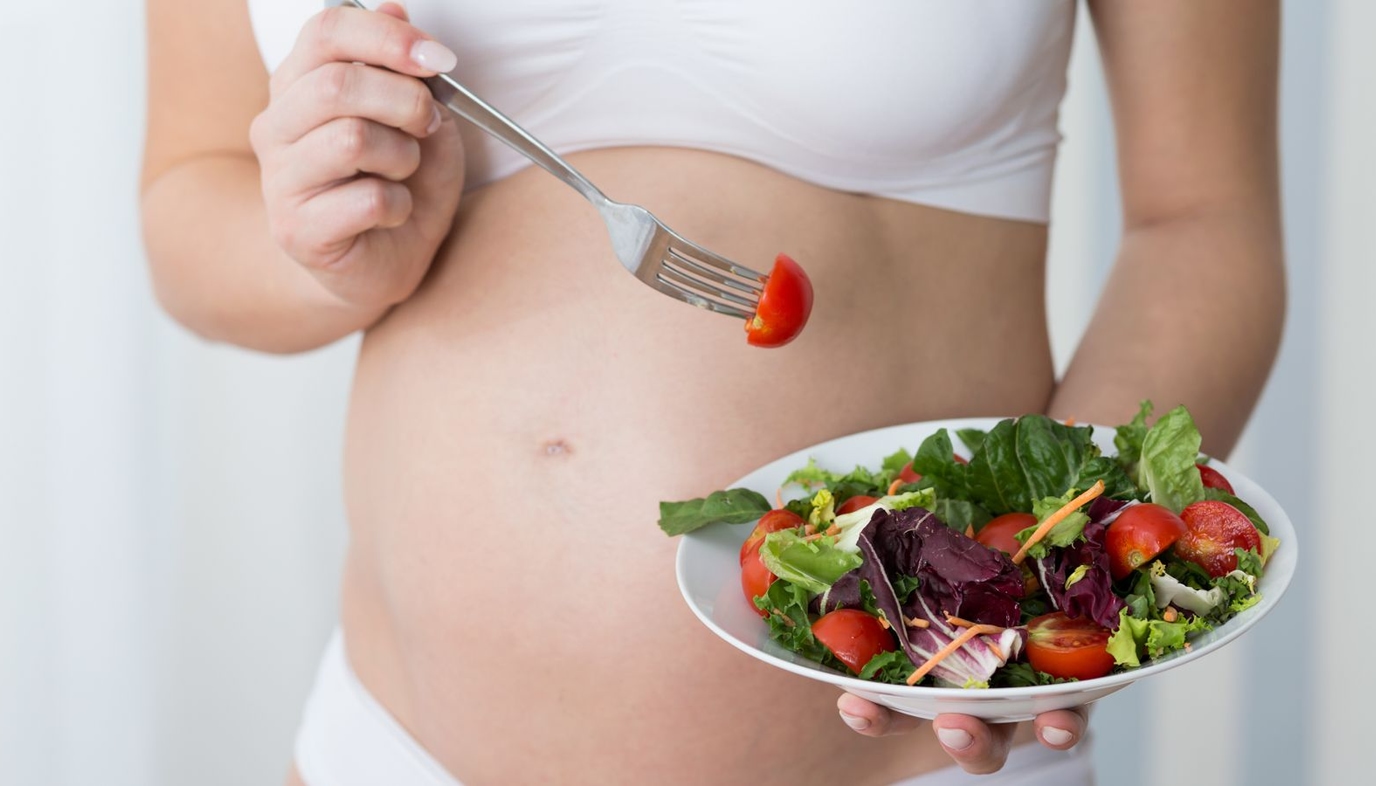
If you are a vegetarian, you may be wondering if it is okay to keep eating a vegetarian diet during your pregnancy. You may have been told by well-meaning friends that you have to eat some types of meat when you are pregnant. This is simply not true. It is perfectly safe to eat a vegetarian or even a vegan diet when you are pregnant. There are many health benefits that are associated with eating a vegetarian diet, and these benefits don’t go away just because you are pregnant. It may take a little extra planning for you, but your non-vegetarian friends may actually have more planning to do during pregnancy than you. Many vegetarians already consume a well-balanced and planned-out diet so planning for pregnancy may not take much work.
Vegetarians and Pregnancy
A little over two percent of Americans follow a vegetarian diet. Most vegetarians continue to follow a vegetarian diet during their pregnancies. There are several types of vegetarians. Lacto-ovo vegetarians do not eat meat, but they do eat eggs and dairy products. Lacto vegetarians are similar to lacto-ovo vegetarians, but they do not eat eggs. Vegans are the most restrictive form of vegetarianism. Veganism is more of a lifestyle than a diet. Vegans do not eat, consume, or wear any types of animal products, or animal by-products, including eggs, dairy, honey, fur, leather, or gelatin.
Problems Eating Enough Protein During
Pregnancy
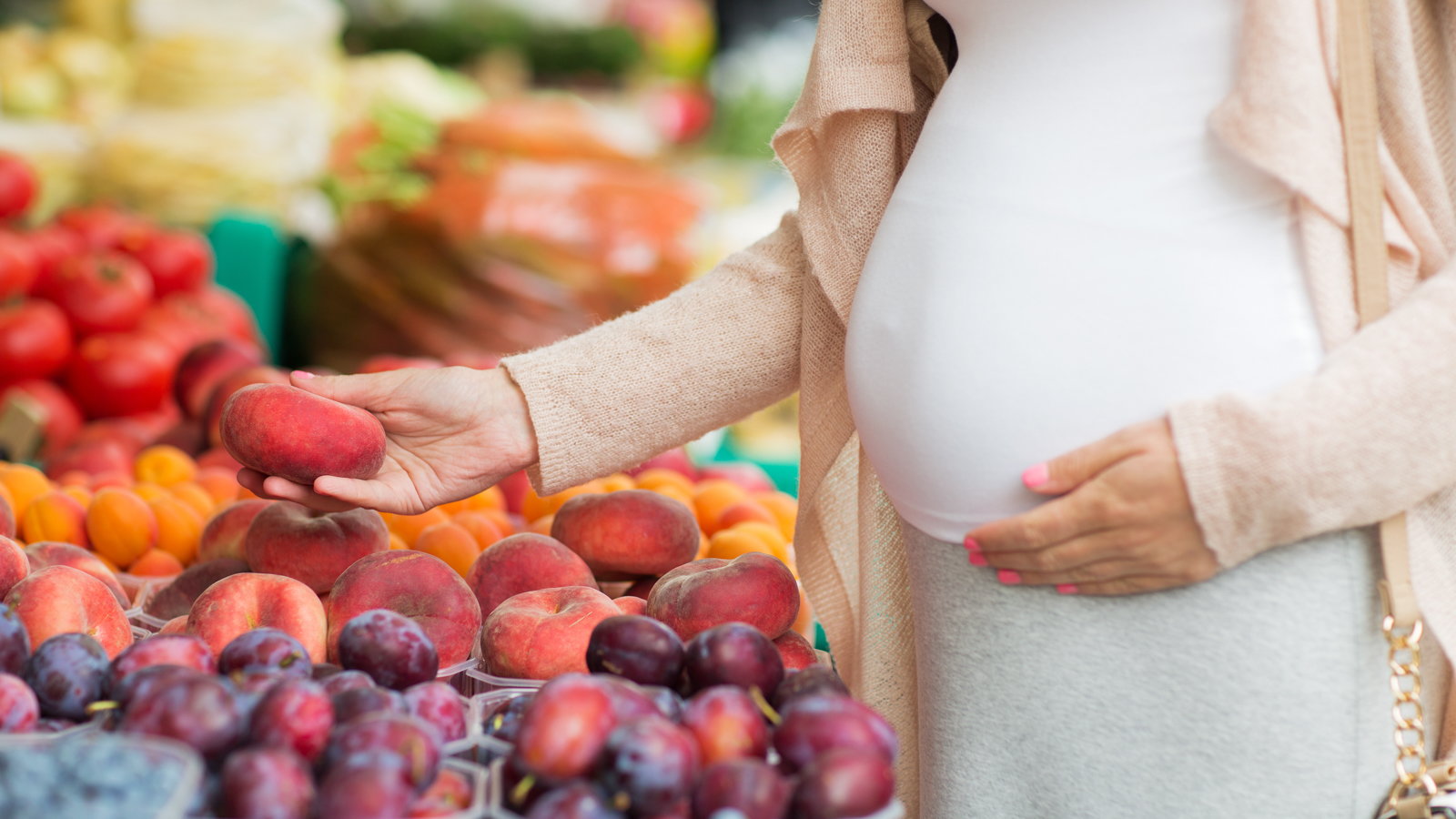
This is probably the biggest myth about vegetarianism. Vegetarians generally eat plenty of protein. Meat is not the only form of protein, and most meat eaters eat considerably more protein than they need. Protein is important for your baby’s developing brain and nervous system. It is recommended that pregnant women eat about 60-70 grams of protein. This is easy to achieve by eating foods such as soy milk, legumes, nuts, bagels, or alternative meat substitutes such as soy burgers.
Aren’t vegetable proteins incomplete? Remember hearing about complete proteins and food combining? It is true that vegetable proteins are not complete proteins, but you do not have to eat protein combinations at the same time. Complimentary proteins such as cereals, pasta, legumes, or nuts only give you a portion of your protein needs. By eating a variety of complementary proteins, you should have no problems meeting your protein needs.
Getting Enough Calcium During Pregnancy
Pregnant women need to be eating about 1200 mg of calcium a day. Calcium is needed for your baby’s bones and teeth. Calcium can be found in foods like milk, cheese, and green leafy vegetables. If you are a lacto or lacto-ovo vegetarian, it should be pretty easy to meet your calcium needs. If you are a vegan, you can drink fortified soy milk or juice or eat foods such as spinach, black beans, or almonds.
Vegetarian Iron Deficiency During Pregnancy
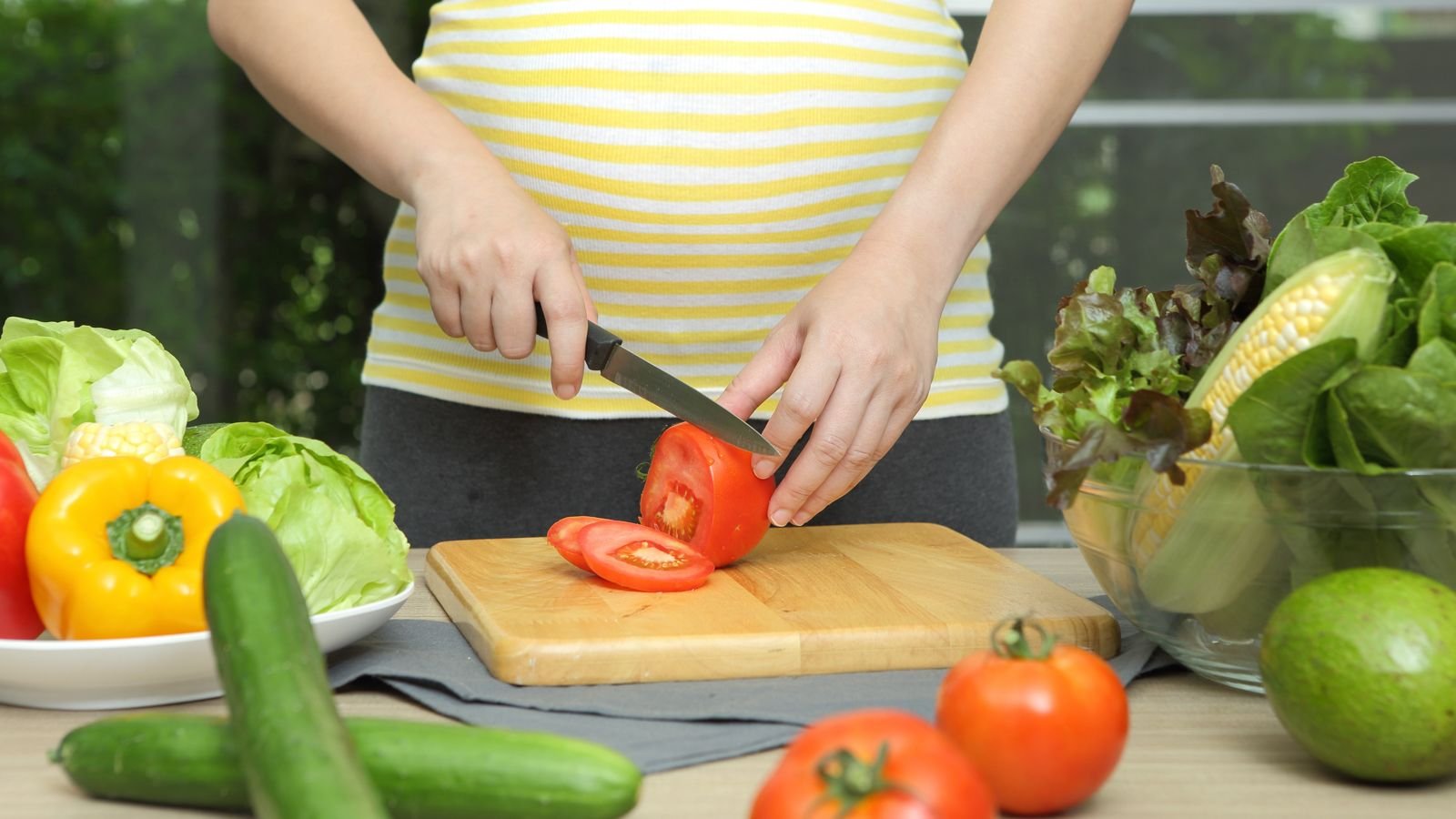
Pregnant women should be consuming about 30 mg of iron per day. Plant foods only contain nonheme iron. Nonheme iron is more sensitive to foods that inhibit absorption. However, they are also more sensitive to foods that enhance absorption. Vegetarians sometimes have problems with iron deficiency because they are not absorbing the iron that they eat in their diet. One way for vegetarians to improve their iron absorption is to eat foods that are low in iron inhibitors (foods that keep you from absorbing iron) and high in iron enhancers such as vitamin C. Iron deficiency anemia is a common problem in pregnancy that affects both vegetarians and non-vegetarians similarly. Your doctor will likely prescribe a prenatal vitamin that contains iron or a separate iron supplement in your second or third trimester.
What About Vitamin B-12?
Vitamin B-12 is needed for cell division and protein synthesis. Pregnant women should have about 2.6 mcg of vitamin B-12 in their diet per day. Vitamin B-12 is found in animal products such as milk and eggs. Lacto and Lacto-ovo vegetarians generally do not have as many problems with consuming adequate amounts of vitamin B-12 as vegans do. Still, vegans can meet their vitamin B-12 needs by eating foods such as soy milk or breakfast cereals that are fortified with vitamin B-12. You can also look for nutritional yeasts like Red Star brand T6635, which is a good source of vitamin B-12 for vegans.
How Much Folic Acid Do You Need During Pregnancy?
Folic acid is found in foods such as leafy vegetables, peanuts, whole grain bread, and cereals. Vegetarians usually eat do not have problems eating enough folic acid. Your diet should contain around 600 mcg of folic acid during pregnancy. Folic acid is important in the formation of your baby’s neural tube. Eating a diet that is high in folic acid is one of the best things you can do to prevent neural tube defects. Because the neural tube forms very early in pregnancy, it is recommended that women who are of child-bearing age eat a diet that contains at least 400 mcg of folic acid per day.
Vegetarians can have a healthy pregnancy with proper planning. Take some time to review your diet and discuss any concerns with your doctor or midwife.