
by Jack Newman, MD, FRCPC
This is not an information sheet on all the ins and outs of working outside the home and breastfeeding. This sheet provides information on how your baby can be fed when you are not with him. It is addressed in particular to the mother who is returning to paid work when the baby is about 6 months of age. New mothers should stay home with their babies for as long as is practical and take full advantage of whatever maternity leave is available. Your baby will never be this age again.
Some Myths:
1. Babies must learn to take a bottle so that they can be fed when the mother is not there.
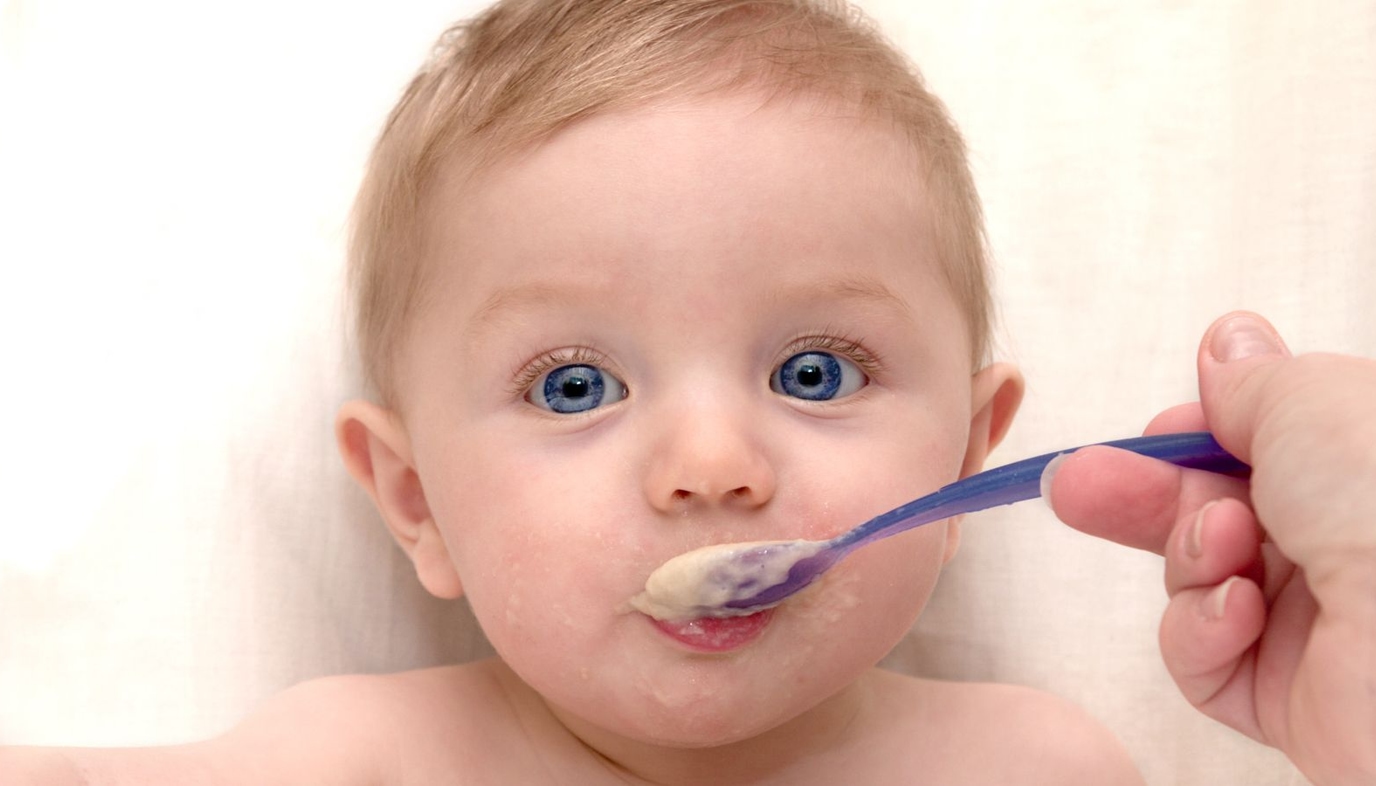
Not true. Some exclusively breastfed babies will not take a bottle by 2 or 3 months of age. Most, who have not taken a bottle, and even some who did accept a bottle in the first weeks of life will not take one by the time they are 4 or 5 months of age. This is no tragedy, and there is no reason to give a bottle early so that the baby knows how. If your baby is refusing to take a bottle, do not try to force him; you and he may become very frustrated and there is just no need to go through all this. If the baby is 6 months of age when you start back at outside work, the baby quite simply does not need to take a bottle. He can be fed solids off a spoon just as any other 6 month old and by 6 months of age he can be taking enough so that he will not be hungry during the day. Furthermore, he can start learning to drink from a cup even by 5 or 6 months of age. The cup can be an open cup and does not need to have a spout. Start with water, as your baby may spill a fair amount at first. If, however, he has not gotten the hang of the cup by the time you must leave him, do not worry; he can take fluids off a spoon, or the solid foods can be mixed with more liquid (expressed milk, juice). Obviously, if the baby is to be taking a fair amount of a variety of foods by 6 months of age, he may need to be started on solids by 5 months of age. However, some babies prefer to wait for the mother in order to drink something. This is fine; many babies sleep 12 hours at night without drinking or eating at all.
2. But getting the baby to take a bottle surely won't hurt.
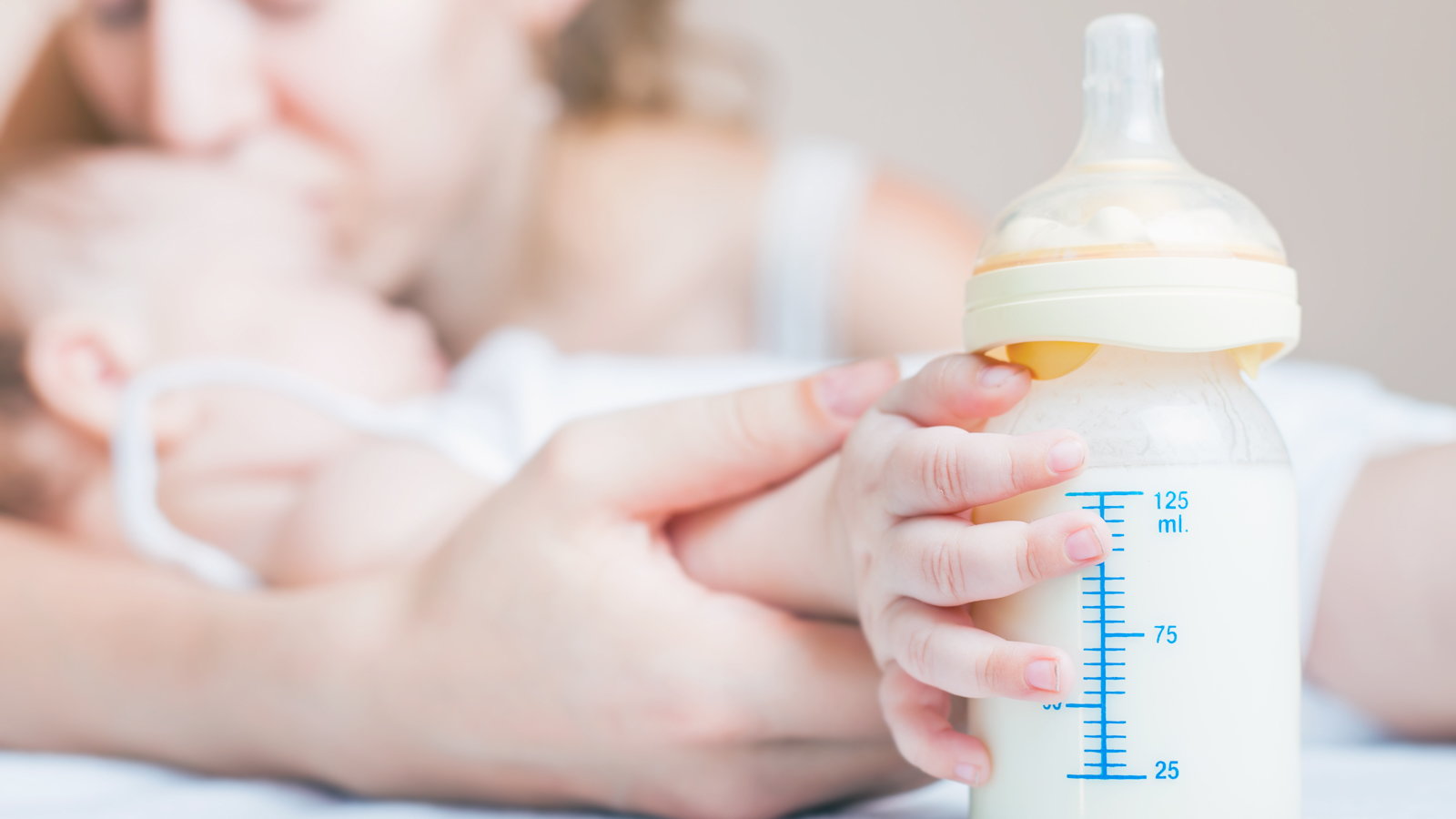
Not necessarily true. Some babies do fine with both. The occasional bottle, when breastfeeding is going well, will not hurt. But if the baby is getting several bottles a day on a regular basis, and, in addition, your milk supply decreases because the baby is nursing less, it is quite possible that the baby will start refusing the breast, even if he is older than 6 months of age.
3. Babies need to drink milk when the mother is not at home.
Not true. Three or four good nursings during a 24 hour period plus a variety of solid foods gives the baby all he needs, nutritionally, and thus he does not need any other type of milk when you are at your outside job. Of course, solid foods can be mixed with expressed milk or other milk, but this is not necessary.
4. If the baby is to get milk other than breastmilk, it needs to be artificial baby milk (infant formula) until the baby is at least 9 months of age.
Not true. If the baby is breastfeeding a few times a day and getting fair quantities of a variety of solid foods, infant formula is neither necessary nor desirable. Indeed, babies who have not had infant formula before 5 or 6 months of age often refuse to drink it because it tastes pretty bad. (If you want to convince yourself of how little we know about breastmilk, ask yourself why it is that though breastmilk and infant formulas have the same amount of sugar, breastmilk is so much sweeter). If you want to give the baby some other sort of milk, homogenized milk is acceptable at 6 months of age, as long as it is not the baby's only food. In fact, if the baby is taking good quantities of a wide variety of foods, breastfeeding 3 or 4 times a day, and growing well, homogenized milk or 2% milk is good enough, but also not necessary.

5. Followup formulas (artificial milk for infants over 6 months of age) are specially adapted to the needs of infants 6 to 12 months of age.
Not true. They are completely unnecessary and are specially adapted to the needs of the formula companies' profit margins. They also are part of a marketing strategy which tries to get around restrictions on the advertising of artificial baby milks directly to the public (widely disregarded in any case). In Europe now, there are special formulas available for the toddler (1-3 years of age). Some people will buy anything, it seems. But these toddler formulas will soon be here. You can bet on it.
6. The breastfed baby 4 months of age needs to be getting more iron than can be provided by breastmilk alone.
Not true. For the baby the baby born at term who is breastfeeding exclusively, all the iron required is provided by breastmilk. However, by 6 months of age, more or less, it is prudent for the baby to begin getting more iron than that provided by breastmilk alone.
7. The best way to assure the baby's getting enough iron is to give him infant cereals.
Not true. Infant cereals do contain a lot of iron, but most of it is not absorbed, and this amount of iron seems to cause constipation in some babies. Furthermore, some breastfed babies who have had only breastmilk to 5 or 6 months of age do not like cereal. There is nothing wrong with infant cereal, but pushing this food on reluctant babies may result in later feeding problems. The best way to assure the baby is getting enough iron is to continue breastfeeding, and introduce solid foods in a relaxed, enjoyable way at the appropriate time (Handout #16 Starting Solid Foods). The appropriate time is when the baby is showing interest in eating by reaching out for and trying to eat food the parents or other members of the family are eating. This occurs usually about 4 1/2 to 5 1/2 months of age. A baby this age can eat what the parents eat, with few exceptions. There is no need to be obsessive about the order in which foods are introduced, or trying to keep the baby eating only one food/week. The best source of extra iron for the 6 to 12 month old baby is meat, the iron of which is very well absorbed. Start feeding the baby solids in a way that makes eating enjoyable, and the baby will eat iron containing foods just fine.
Handout #17 What to Feed...
Jack Newman, MD, FRCPC is a pediatrician, a graduate of the University of Toronto medical school. He started the first hospital-based breastfeeding clinic in Canada in 1984. He has been a consultant with UNICEF for the Baby Friendly Hospital Initiative in Africa. Dr. Newman has practiced as a physician in Canada, New Zealand, and South Africa.
This article may be copied and distributed without further permission.