
From the time your baby first rolls over, one of your first thoughts for them turns to their safety. Because if you're like me, I did not even think about baby, child or toddler proofing my house till then. When starting to think about baby/child proofing, there is just so much to think about, and consider. It can be very easy to get overwhelmed and possibly overlook something.
From baby gates, to the gadgets out there, to locking cabinets and turning away pot handles, there's just so much to know and remember. I am going to try to touch on many of them below, but all in all it comes down to a lot of common sense.
One of the first things you will want to do initially is an inventory of your home. This is best done on all fours; I have also found it beneficial to bring a pen and piece of paper down with me. I then can write down items that you would like to get or things I would like to move. Crawling around might seem weird, but you need to get a "kids" view of your home. When on your knees, there's a lot more "interesting" stuff in your home than you might think. You will want to pay particular attention to the rooms and areas that your baby/toddler will be in the most, such as the nursery or play room.
Some Questions to Ask Yourself During This "Knee's Eye View" Are:
- Are there important books, breakables, or other items that I treasure with in hands reach? (Yes, I do mean your arms reach, while your arm span will be longer than your child's you will be amazed at how your child will find ways to get to things that you think are back on shelves far enough, so these items should be moved to high places or into another room.)
- Are there cords from blinds hanging down? (Blind cords can be a major choking hazard.)
- Does your furniture have sharp corners? (Your baby why learning to walk, could fall and hurt himself on corners.)
- Are there any electrical outlets down with in babies view? (Electrical outlets could cause electrocution, when little fingers can get to them.)
- Are there any small items that are laying on or near the floor? (Babies can choke very easily on things that you would not think a problem. The rule of thumb is if it can fit in a toilet paper tube, it is to small for little hands.)
- Is your "baby area" in or near a kitchen? (If so think about putting up items that maybe under your sink, or putting a baby lock on those cabinets.)
Products for Proofing
There are so many on the market today, it's hard to know what your going to need and what you can leave behind. The inventory of your house will be vital.
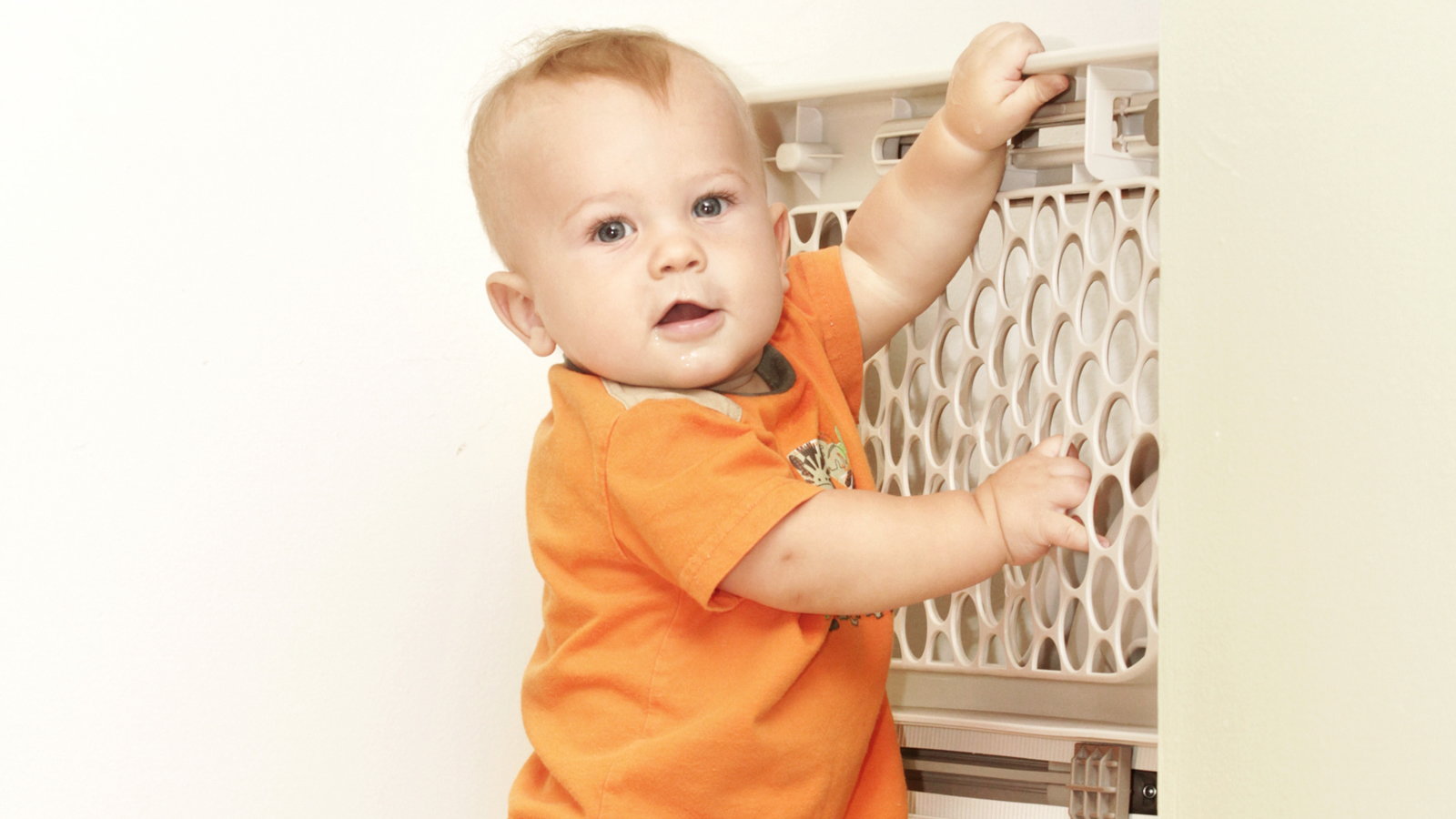
- Baby Gates - Baby gates are a great way to prevent your baby or toddler from going places you would rather them not go. They can be placed in door ways, or at the tops and bottoms of stairs. They can keep your baby safe from falling down stairs, keep them from entering the kitchen or bathroom, or even keep them in one section or room within your house. When looking for a good baby gate, the mesh center area or the holes within the gate should not be large enough to put your babies toes in; if your child can put there toes in the holes, that means he can climb over. Many gates on the market today can be operated one handed, which is a wonderful thing if you have your baby in one hand and need to get the gate open. Gates also can be free standing units; which is nice if you might consider moving it from place to place. They also have gates that can be screwed into your wall, which swing open; these gates are especially nice if you will be leaving the gate where it is.
- Corner Cushions - Corner cushions are for those corners on furniture. They are usually plastic and they sit on the edge of your furniture. By doing so, they provide a blocker from your child's head and the corner of that particular piece of furniture. One drawback to them is that most of them seal to your furniture by glue or a sticky substance. However, now they have also come up with a full pad for tables. These are great; they have elastic inside of them and "fit" or "conform" to your table, meaning that you can slide a pad all the way around the outside edge of your table, adding some padding so that if your baby falls there will at least be something to break his fall. Since these have elastic they pull themselves taut and there is no need for glue or a substance to keep them stationary.
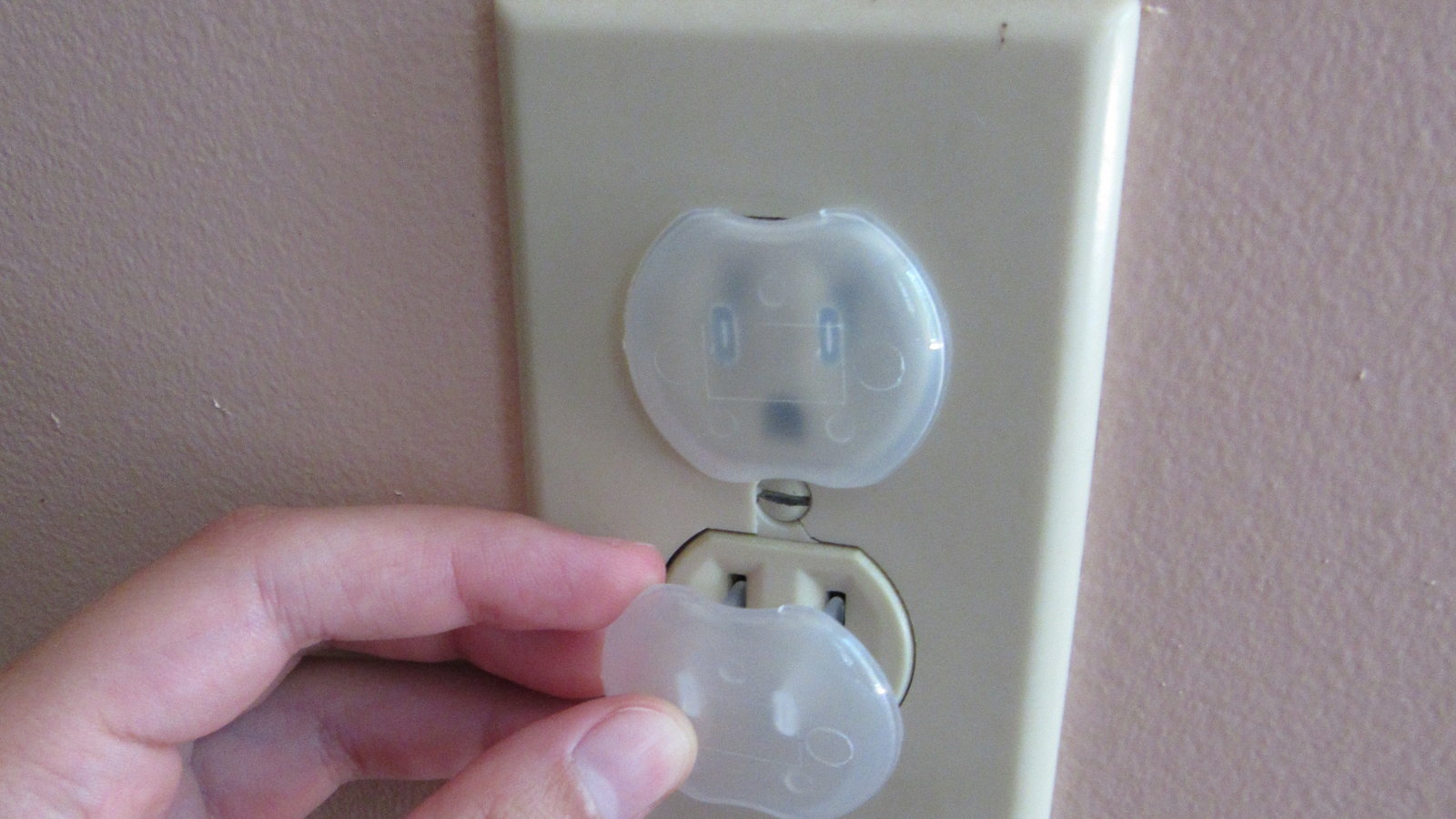
- Electric Outlet Covers - Outlet covers can be as simple or as complex as you want or need them to be. The simplest kind are plastic covers that simply fit with in the electric outlet and are next to impossible to remove. (Though beware, they can pose a very real choking risk if found laying about in your house.) Now they also sell the actual electric outlet that is child proof. It has a "plate" on top of the outlet that an adult must slide aside in order to plug anything in. In addition to that, they also sell covers; these covers go over plugged in items as well as protect unused plugs. By using these you can use your plugs and be sure that your child can't pull the cord out of the wall (which is a choking hazard), nor can they then stick their fingers in the holes once it is removed, which is also a hazard.
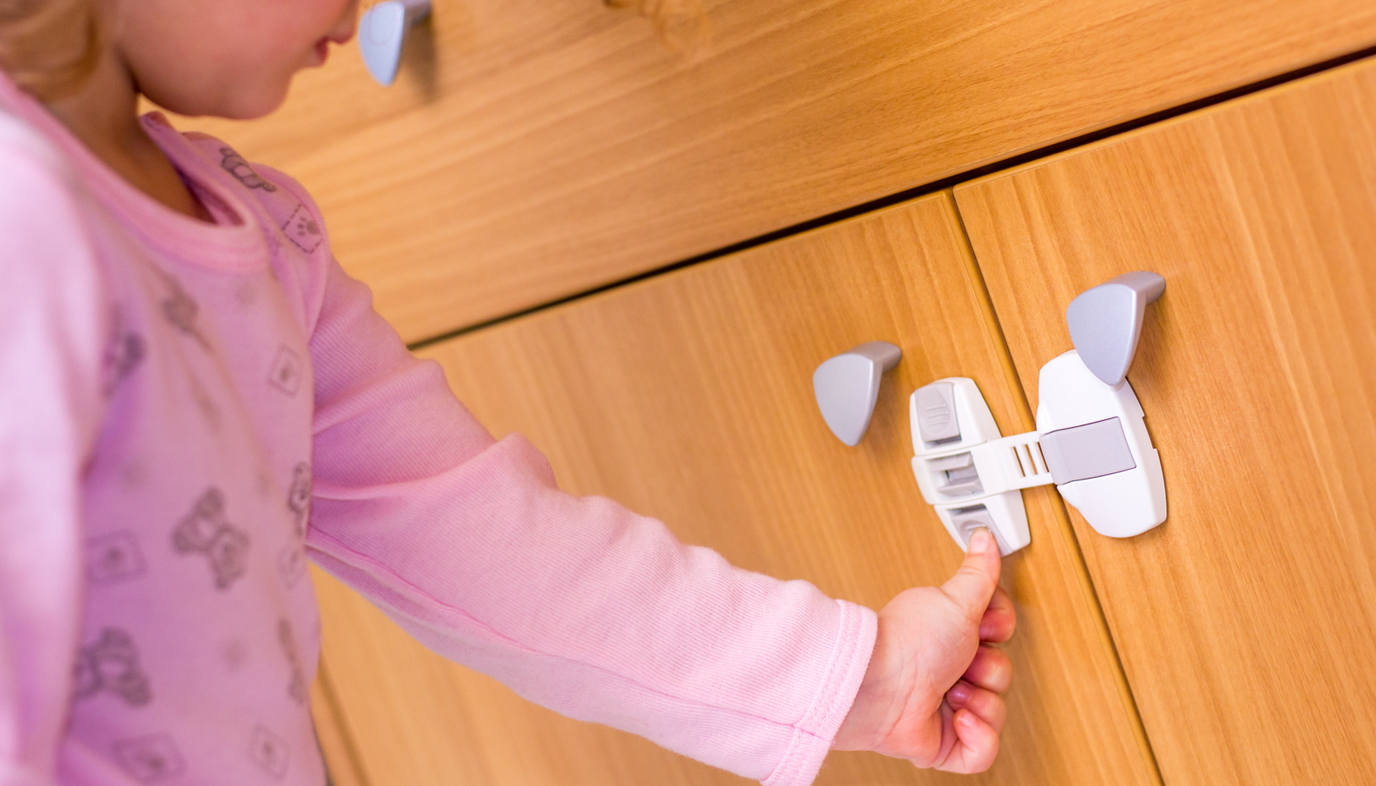
- Cabinet and Drawer Locks - Cabinet and drawer locks are basically what they say. They are locks to help keep your baby out of dangerous things within your house. It is recommended that you place any and all hazardous materials out of babies' reach, or out in the garage, however, this is not always possible. So cabinet and drawer locks can work very well for this purpose. They also work for keeping your baby or toddler from tearing though every one of your dish towels all day long as well. They can either be inside your cabinet or drawer or outside. Typically the ones that go outside only work if there are two doors next to each other, as they hook on each door handle and keep each other closed.
- When dealing with decks and banisters, there are also products available. There is a mesh netting that does require that you screw it in place, but it will prevent little bodies from getting though the holes within the banisters or deck rails. They also sell plastic sheets that work well for this purpose.
Particular Rooms Needing Proofing Attention
- The Nursery: When in the nursery, you will want to be sure first that the crib is not placed near a window or near cords from blinds. You will also want to be sure that you cannot fit a can of soda between the rails of the crib (all cribs made after the 1950's are made so that you cannot; that is why it is imperative that you do not use hand-me-down cribs from that era). The mattress also need to be firm, and there is no "bedding" within the crib. The only thing recommended to be inside the crib with your infant (especially) is a well fitted crib sheet. (As your baby gets older and can move around better, you can put items to play with, or a "lovey" in, just be very sure that your child is in full control over their head before doing so.)
- The Kitchen: When in the kitchen, you will want to take special care as well. First, you will want to either lock or put away items such as cleaners and/or chemicals (this includes soap). It is recommended that you remove them (or place them out of babies reach). Make sure any items which have knives, or even forks in them are locked. While you're cooking, take great care to place the handles towards the rear of the stove, and not hanging over the edge. You will also need to take great care that any and all electrical cords do not hang over the edge of the cabinets; your baby could pull on these and pull dangerously hot stuff onto himself. It is best, if at all possible, to keep your baby out of the kitchen why you're cooking. Either that or place him within a high chair or even within a baby carrier, in the back carry position!
- The Car: When baby proofing for the car, the most important part falls on correctly installing and using the car seat. To do this, it's easiest to take your car and seat to a local fire or police station. These men and woman have to take a 5 hour course in order to learn how to install these seats. They will not only install your seat for you, but also show you how to adjust the straps and how to buckle them once the baby is inside. Another way to child proof the car that you might not think of is removing any and all items that are loose. These items could become flying missiles in a car crash. You can move them to the trunk.
In closing, remember to look though your child's eyes for potential hazards; be mindful that a lot of everyday items, things we would never think of can be harmful to our children, and when in doubt, hazard on the side of caution. Remember to "re-child-proof" your home at least once every 4-6 weeks. And always keep a watchful eye, even in the safest of homes; your baby or toddler will find ways to hurt themselves or test your limits (that's their job!).
About the Author
Jennifer Sprague is co-owner of High Top Baby Designs. She has several years of teaching experience, working with infants through adults, and has a passion for helping children live happy, healthy and secure lives. Jennifer has been a nanny, daycare provider, teacher, and is currently studying to become a Doula and a Lactation Consultant.