
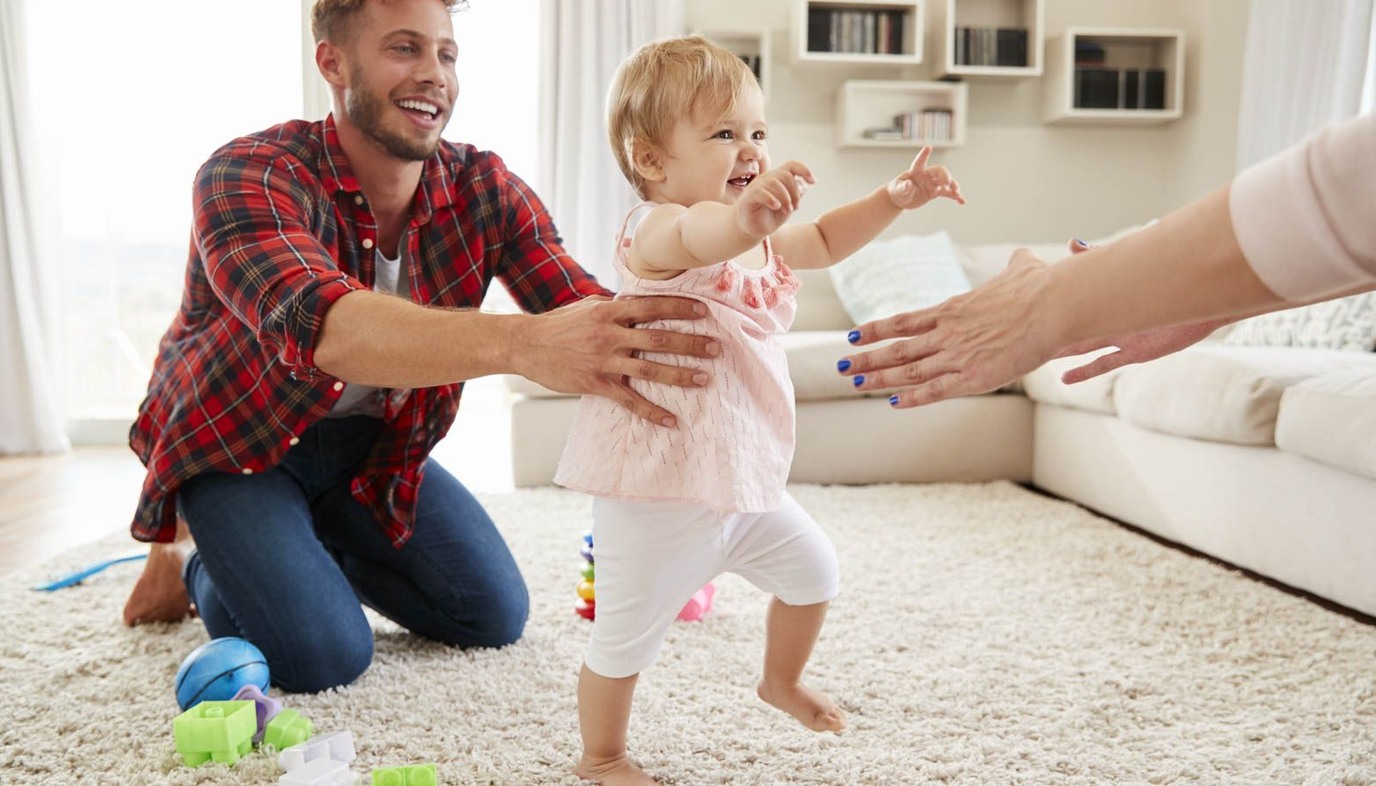
Most babies start to walk around 13 months, but your baby may start walking as early as 9 or 10 months or as late as 15 or 16 months. Some babies go from cruising the furniture to walking rather quickly, and other babies learn to walk at a little slower pace. The pace at which babies learn to walk will vary from baby to baby.
Standing
Before your baby can walk, she needs to learn how to pull herself up to a standing position. Your baby may start pulling herself to a standing position when she is around 8-10 months. You can encourage her to stand by supporting her waist while she holds on to the sofa or other furniture. To make things fun and keep your baby interested in standing, you can place some of her favorite toys on the edge of the sofa. This way she has some incentive to climb up on the sofa or to hold on to the edge of the sofa once she is standing.
Cruising
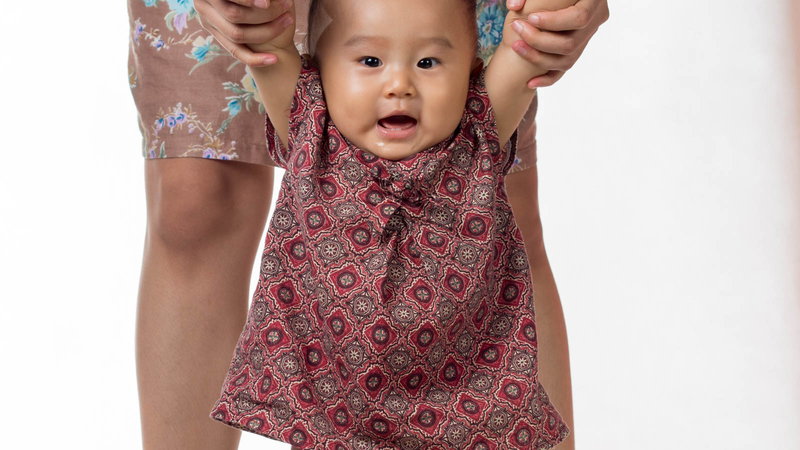
Once your baby learns how to pull herself up to a standing position, she may get interested in cruising the furniture. Cruising will help your baby learn to balance and also help strengthen your baby’s trunk and lower body. When your baby cruises the furniture, he will take steps from side to side to get around the furniture. Eventually he will try letting go of the furniture and take a step.
Once your baby starts cruising the furniture, he will learn how to get himself from a standing to a sitting position. This skill generally develops around 9-10 months. You can encourage your baby to squat down from a standing position by placing a fun toy or something interesting on the floor while he is standing. He may decide to check out the toy and bend down to grab it. At first he may just flop down to the floor to get the toy, but with practice he will be able to squat down, grab the toy, and stand back up. All this pulling to stand, squatting up and down, and cruising from side to side helps your baby develop the strength, balance, and coordination necessary for walking.
Baby’s First Steps
Once your baby gets comfortable pulling to stand, cruising the furniture, and squatting, his next challenge will be to take his first steps. Your baby may take his first steps as early as 9 or 10 months. To get your baby inspired to take his first steps, you may want to try dangling a set of keys or an interesting toy nearby him as he is cruising the furniture. He may try to reach and grab for the toy and in the process take his first step.
Other Tips to Help Baby Start Walking
- Once your baby starts cruising the furniture, you can work on getting him to cruise back and forth from a sofa to a nearby chair. Place a chair adjacent to the sofa. Start off by having the chair very close to the sofa and slowly move the chair just a little further away. You can also place a favorite toy on the chair to motivate your baby to cruise over to the chair. With practice, he will learn to go back and forth from chair to sofa and may eventually take a step and then grab the chair for support.
- Purchase a push toy for your baby to use to practice walking. It may be helpful to secure a small weight, like a velcro hand weight, to the base of the toy for added support. A push toy is great to get your baby moving around. It will help him learn to balance, strengthen his muscles, and it may just give him the confidence he needs to start walking.
- Do not use a baby walker. Baby walkers are different than push toys. A baby walker is an enclosed toy with a tray or bumper around it and wheels on the bottom. Your baby sits inside the walker and pushes himself around with the help of the wheels. A baby walker will not help your baby walk and may actually discourage him from learning to walk. In fact, in Canada they were so concerned about the safety of baby walkers that they have been banned from being advertised, imported, or sold. The AAP strongly discourages the use of baby walkers as well, and has attempted, unsuccessfully, to get a similar governmental ban of them in the US.
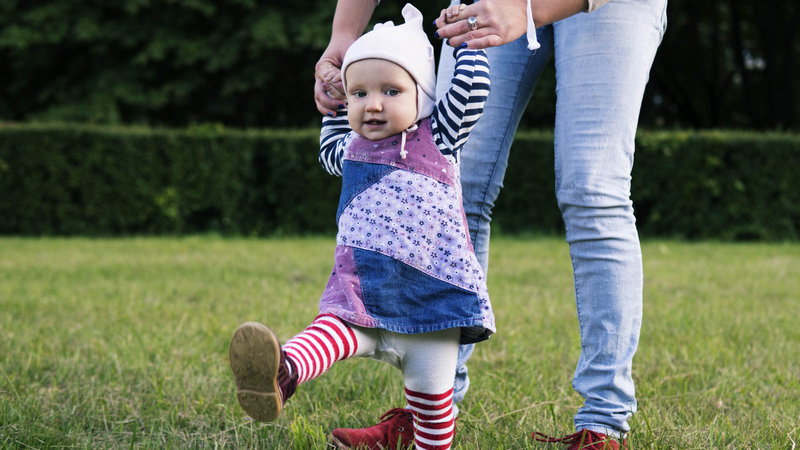
- Hold your baby’s hands while he walks. You can kneel in front of your baby and hold his hands while he walks around the house. Once he is comfortable walking with two hands you can try holding just one hand while he practices walking. Another trick you can try is to kneel in front of him holding a broom handle (or something similar that is sturdy) for him to grab onto. Let him use the handle for support while he practices walking.
- If your baby is having a hard time walking with shoes on, try ditching the shoes for a while. Babies sometimes have a hard time balancing and learning to walk with shoes. Most babies have an easier time walking when barefoot, so save the shoes for outdoor play.
Should I Be Concerned if my Baby Isn’t Walking?
Not every baby will learn to walk at the same time. Some babies will start walking much earlier than others for various reasons. There is no reason to worry if your baby is under 18 months and not walking yet. You may find your baby is developing right on track with his speech and language milestones but a little more slowly with his movement milestones. Some babies will make faster progress with language skills and others will do better with motor skills. As long as your baby is making steady progress with his milestones, there is usually nothing to worry about. However, if your baby is 18 months and is still not walking, you should talk to your doctor. He may recommend early intervention services or physical therapy for your baby.