
Starting around 18 weeks of pregnancy, you will begin to feel fetal movements. These kicks and movements will be easier to distinguish the further along you are. Around 28 weeks of pregnancy is a good time to start keeping track of fetal movements daily by using a kick count chart. Opinions vary from practice to practice on how to count kicks, number of kicks to count, and when you should call your doctor. Talk to your doctor about her protocol for performing kick counts.
Cardiff Count to Ten Method
The Cardiff Count to Ten method is probably the most common method for tracking fetal movements and is the method used for the fetal kick count chart below. With this method, you count kicks around the same time each day. Timing kicks about an hour after meals is best.You mark your starting time and then start counting kicks until you reach ten fetal movements. Then mark your ending time on the chart. As a general guide, you should expect ten movements within two hours, but please contact your physician for their procedure. If you notice a decrease in your baby's fetal movements a significant change in his or her activity, it is always best to check with your doctor. Decreasing fetal movement can be a sign that your baby should be evaluated and warrants a phone call
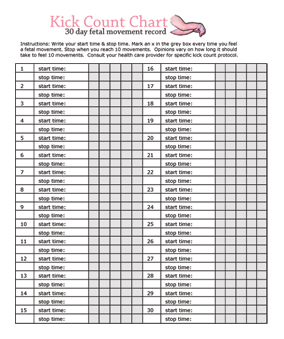
You will need Adobe Acrobat Reader to view this chart. You can download Adobe Acrobat Reader here.