
What Is a Night Terror?
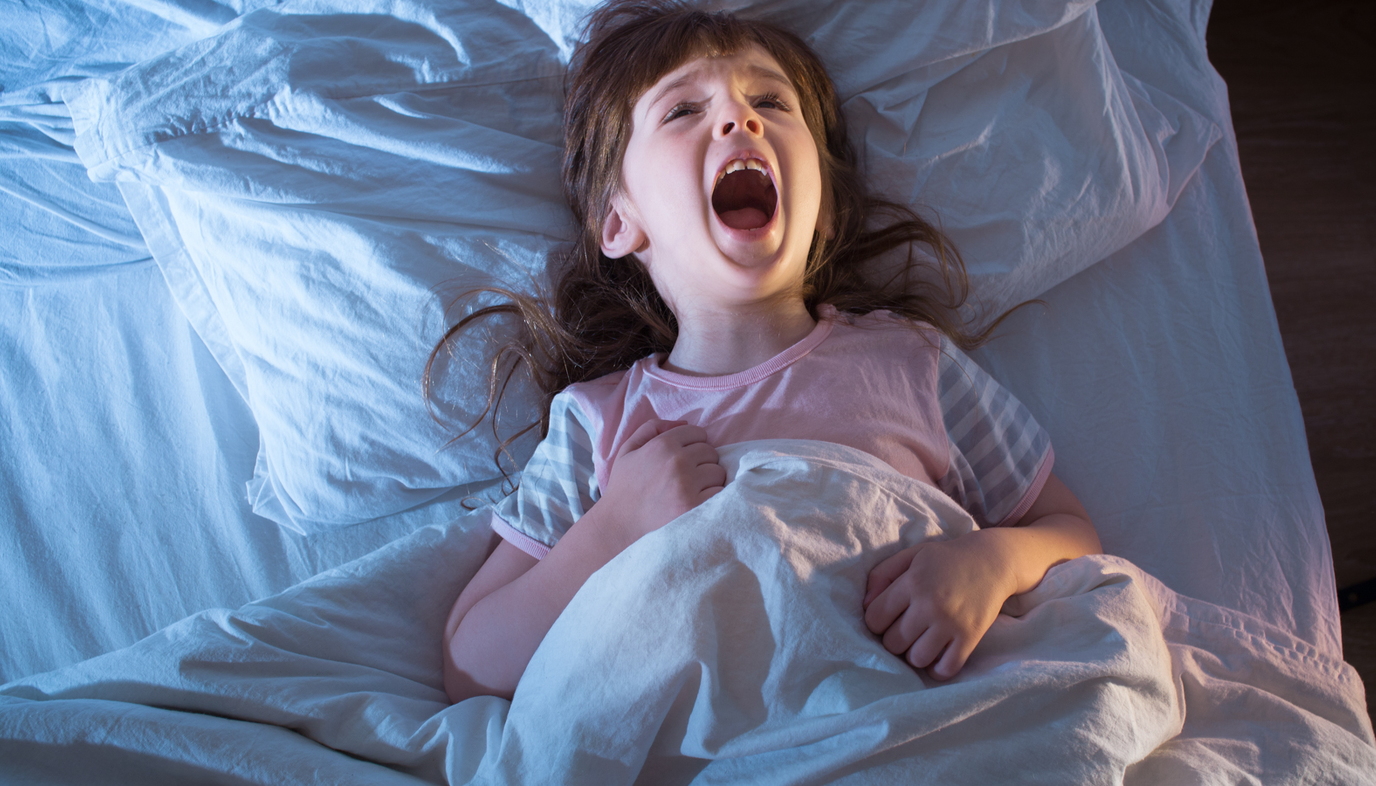
A night terror is not the same as a nightmare. A night terror occurs when a child is partially awakened from a very deep sleep. Sleepwalking is also another example of partial arousal from a deep sleep. Night terrors generally happen shortly after a child falls asleep. Sometime during the first fifteen minutes of sleep, the body goes into the deep non-REM sleep. This normally lasts around forty-five minutes to two hours.
Night terrors happen during this stage of sleep whereas nightmares occur usually during the second half of the night when the child enters REM sleep. Often the night terror will be worse if the child has been in non-REM sleep for a while. Usually during a night terror, a child will thrash or scream in her sleep; sometimes she might moan, talk or break out in a sweat. A night terror can last anywhere from five to forty minutes. Unlike a nightmare, a child will fall right back asleep after the night terror and have no memory of what happened. Night terrors can occur in children as young as six months but normally happen in children age three to five.
What Causes Night Terrors?
There is no explanation for night terrors. It is a very mysterious disorder that occurs in a small percentage of the population. Many times it is dismissed as just having nightmares. Sometimes in older children and adults, it is misdiagnosed as Post Traumatic Stress Disorder. Stress can contribute to night terrors, but they are not caused by stress.
What to Do if Your Child is Having Night Terrors
If your child is having a night terror, don't try to intervene. Let the night terror run its course. You can hold your child and comfort her but don't try to restrain her or yell at her to wake up. Of course, if she is in danger, you should keep her from harming herself. This is not the same thing as a nightmare, where she will wake up and you can talk to her and try to reassure her. Often times she might open her eyes and maybe talk to you but she is still not fully awake and is probably not aware of your presence. After the night terror is over, she will probably go right back to sleep and may not remember what has happened. Don't try to keep her awake to explain what has happened. Let her go back to sleep, as she probably isn't aware of what has happened and talking about it will not prevent it or make it better.
Night Terrors - Treatment and Prevention
Some things you can do to help prevent night terrors are keeping your child on a regular sleeping schedule. Try to avoid letting your child get over-tired. Put your child to bed at the same time, in the same place. Establish a bedtime and napping routine. Most children outgrow night terrors. There are some sleep medications that they can prescribe to help your child sleep better if she is having severe problems. If your child is having recurrent or worrisome night terrors, contact your pediatrician.