
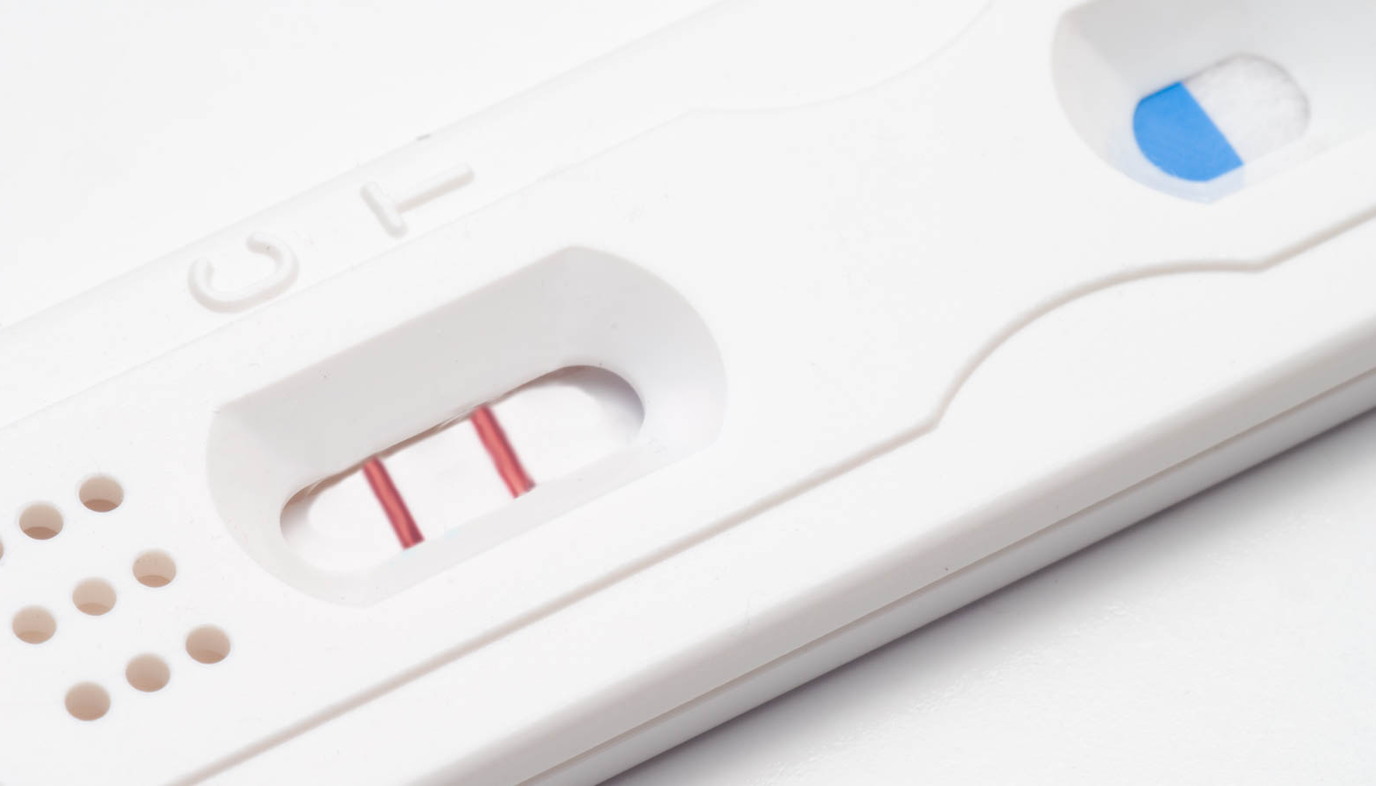
Ovulation prediction kits, OPKs, work by detecting the presence of luteinizing hormone, LH. LH is produced by the pituitary gland and triggers ovulation. OPKs are helpful in pinpointing when ovulation will occur before it occurs. Before ovulation occurs, the body secretes a "surge" of LH, which triggers ovulation. Because the LH surge typically occurs 24 to 48 hours before ovulation, OPKs can increase your chances of becoming pregnant.
Home pregnancy tests work by detecting the presence of Human Chorionic Gonadotropin, HCG. Today's home pregnancy tests can detect HCG in the urine of pregnant women even before a period is missed.
If OPKs detect LH and HPTs (home pregnancy tests) detect HCG, why would anyone think you could use an OPK as an HPT?

HCG and LH
Let's take a closer look at LH and HCG. Both hormones are glycoproteins, meaning they consist of a protein with a sugar attached to it. If you remember from high school biology, proteins can be broken down into chains of amino acids. HCG and LH can be broken up into two units or "chains", one subunit called "alpha" and the other "beta." If you look at the alpha subunit, the chains of amino acids are identical. In fact, HCG's alpha subunit is identical to the hormones LH, FSH, and TSH, all produced in the pituitary gland. HCG is the only one of these alpha subunits that is not produced by the pituitary, but rather the placenta.
We know that the alpha subunits are identical, but what about the beta subunits? The beta subunits of LH and HCG are also very similar in structure and function. This is why you will see HCG injections used as an infertility treatment. HCG injections are used to replicate the LH surge of the menstrual cycle to induce ovulation.
Where HCG and LH differ is HCG's beta subunit has about 30 extra amino acids attached to the end of it. Home pregnancy tests are designed to specifically look for this HCG beta subunit.
OPKs as HPTs
OPKs are intended to detect LH. Since LH and HCG are nearly identical, OPKs will also detect HCG. The reverse is not true for HPTs. Home pregnancy tests will only detect HCG. So in theory, yes, an OPK could detect pregnancy.
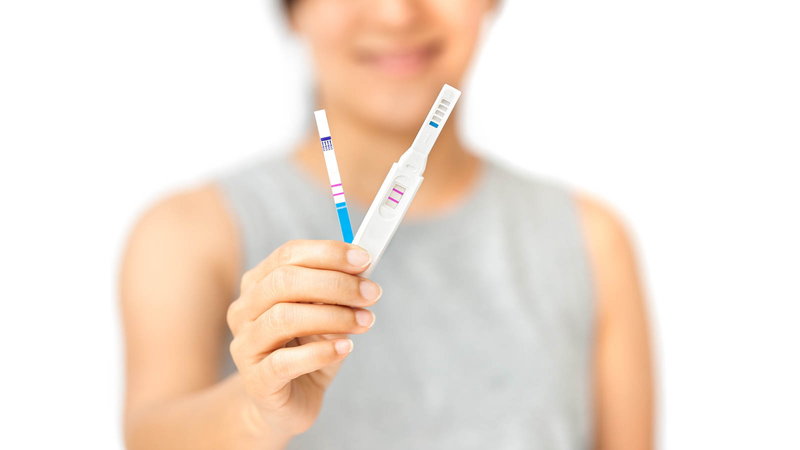
Reasons Not to Use an Ovulation Prediction Kit for a Home Pregnancy Test
OPKs cannot distinguish between LH and HCG. Getting a positive OPK only confirms that you have either LH or HCG in your system.
It is important to discuss some of the other differences between OPKs and HPTs. LH is present in the body at all times. HCG is not. With OPKs, they detect a sudden increase or "surge" of LH. The typical amount of LH that is in the body at any given time is between 5-20 mIU. Therefore an OPK is looking for a surge above this typical amount. Most OPKs look for a level around 30-40 mIU. However, there are some tests that detect lower levels of LH. You can easily see how testing with a more sensitive OPK could result in a false positive. Newer OPKs look at a combination of LH and estrone-3-glucuronide, E3G, which may be helpful to further pinpoint ovulation.
Home pregnancy tests on the market are very sensitive, testing at 25 mIU and below. This is more sensitive that the typical OPK. So even if you could get a positive on an OPK, you would most likely get one sooner on a home pregnancy test. Because OPKs are designed to detect LH and not HCG, it is not recommended to use an OPK for an HPT.
Pregnant? Want to know your due date? Use JM's Due Date Calculator to find out your due date.