

As your baby begins her second year of life, she may have a handful of words or she may not have spoken her first word yet. There is a wide rage of normal in children's speech and language development, but knowing how to distinguish a "late bloomer" from a truly delayed child can be a difficult task for a parent.
Speech & Language: 12 to 15 months
By 15 months, your child should say between 4-6 words. Along with these new words, she should be understanding more and more of what is said to her. She can use gestures and pointing to express herself. If your child has not said her first word by 15 months, consult your physician for an evaluation.
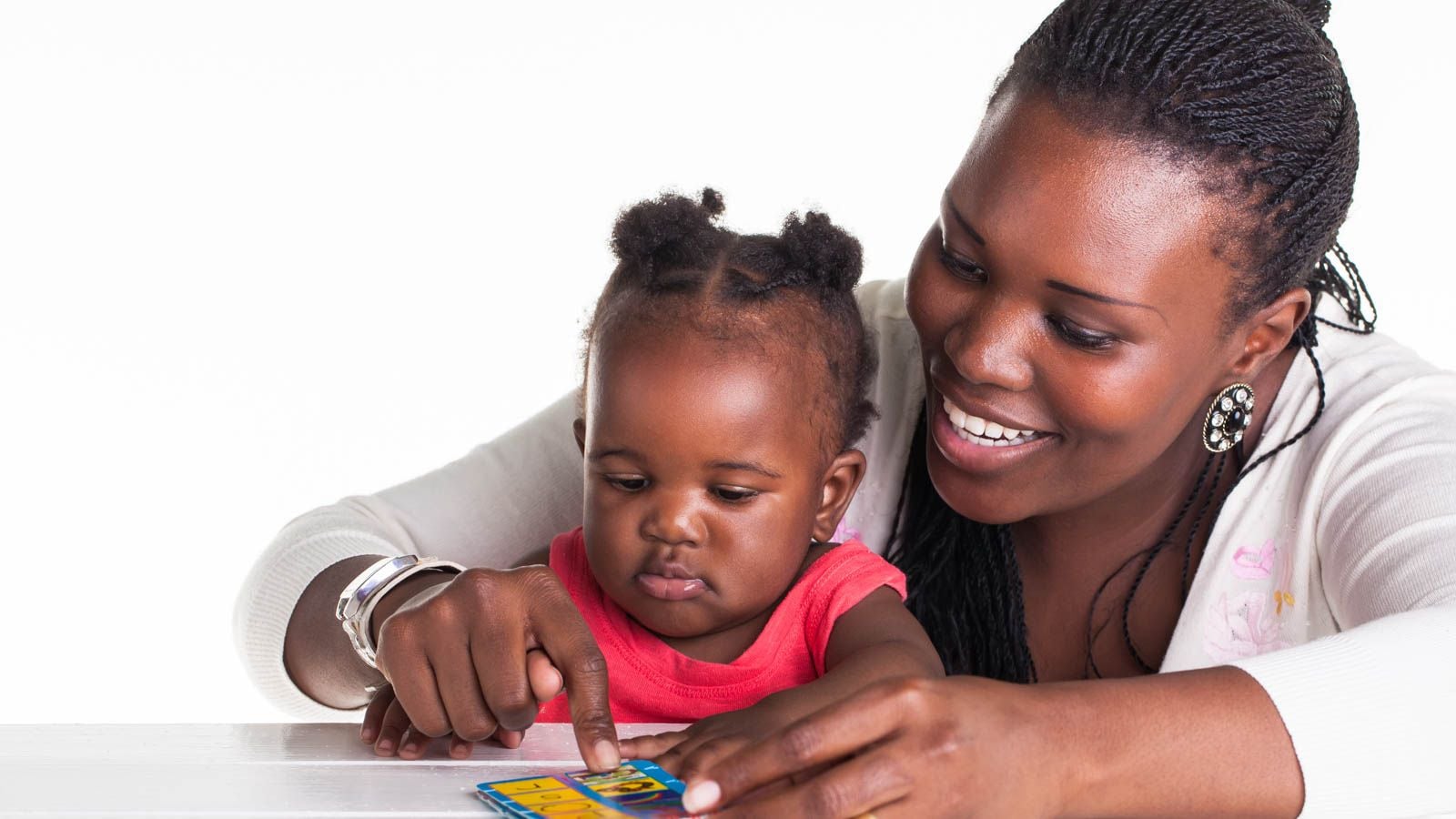
There are many ways you can encourage your toddler to talk. Reading books to her is a great way to improve her speech and language. Children at this age love to have the same book read to them over and over and over again. Book recommendations include Brown Bear, Brown Bear, What Do You See?, The Very Hungry Caterpillar, and Goodnight Moon. Using picture books and pointing to the pictures and encouraging her to do so will also help expand her vocabulary and comprehension.
Speech & Language: 16 to 18 months
Your child should know 10 or more words by the time she reaches 18 months. She should be able to point to words and objects now. She is also learning to recognize body parts and should be able to point a few out to you. She can follow simple directions such as "get the ball" and "where are your shoes?"
You can encourage her speech and language by continuing to talk, sing, and read to her. Take her on a walk and point out things you see along the way. See if she can point to the birds, the squirrel, the butterfly, or the yellow house. Now is a good age to introduce colors, although it may be some time before she masters color recognition.

Speech & Language: 19 to 24 months
Between 19-24 months, you will see a language explosion. By the time she reaches the age of two, she will have a vocabulary of approximately 300 words. She should be able to use two to three word sentences and should recognize and say her name. She may begin using pronouns such as I, me, and you. The pronouns he and she may be more difficult for her, and she may use one or the other for both genders.
If your child does not appear to be reaching these speech and language milestones, an evaluation and early intervention services may be necessary. Under the Individuals with Disabilities Education Act (IDEA), children are guaranteed certain services. Services available vary from state to state, but many states offer services free of charge through the public school system or other governmental agency. These services vary from group to individual therapy programs to direct visits to your home. Your pediatrician should help direct you to the correct state agency to assist you in finding services.