

The lack of adequate, restful sleep can affect your child’s mood, behavior, health, memory, and growth. If there is anything standing in the way of a good night’s sleep, it’s important to address the issue and solve the problem. The following is a list of typical sleep disrupters and possible solutions.
Nightmares
Children spend more time dreaming than adults do, so they have more dreams—both good and bad. After a nightmare, saying “It was just a dream” doesn’t explain what they experienced; after all, most kids believe that the tooth fairy and Big Bird are real, too. After a nightmare, offer comfort just as you would for a tangible fear. If your child wakes with a nightmare: 1. Stay with your child until she feels relaxed and ready to sleep. 2. Be calm and convey that what’s happening is normal and that all is well. 3. Reassure your child that he’s safe and that it’s OK to go back to sleep.
Night Terrors
During a night terror, your child will wake suddenly and may scream or cry. Her eyes will be open, but she won’t be seeing. She may hyperventilate, thrash around, or talk incoherently. She may be sweating and flushed. She may seem scared, but your child is not really frightened, not awake, and not dreaming. She’s asleep, and in a zone between sleep cycles. A child having a night terror is unaware of what’s happening, and won’t remember the episode in the morning.
During a night terror, you may try to hold your child, but often this will result in his pushing you away or fighting you off. The best response is a gentle pat, along with comforting words or Shhh Shhh sounds. If your child gets out of bed, lead him back. If he’s sitting up, guide him to lie back down. Keep an eye on him until he settles back to sleep.

Nighttime Fears
It’s normal for a child to imagine monsters that generate a fear of the dark. Even if you explain, and even if you assure him that he’s safe, he may still be scared. You can reduce his fears when you:
1. Teach your child the difference between real and fantasy through discussion and book-reading.
2. Find ways to help your child confront and overcome his fears. If dark shadows create suspicious shapes, provide a flashlight to keep at his bedside.
3. Leave soothing lullabies playing, or white noise sounds running to fill the quiet.
4. Give your child one, two, or a zoo of stuffed animals to sleep with.
5. Put a small pet, like a turtle or fish, in your child’s room for company.
6. Take a stargazing walk, build a campfire, or have a candlelight dinner to make the dark more friendly.
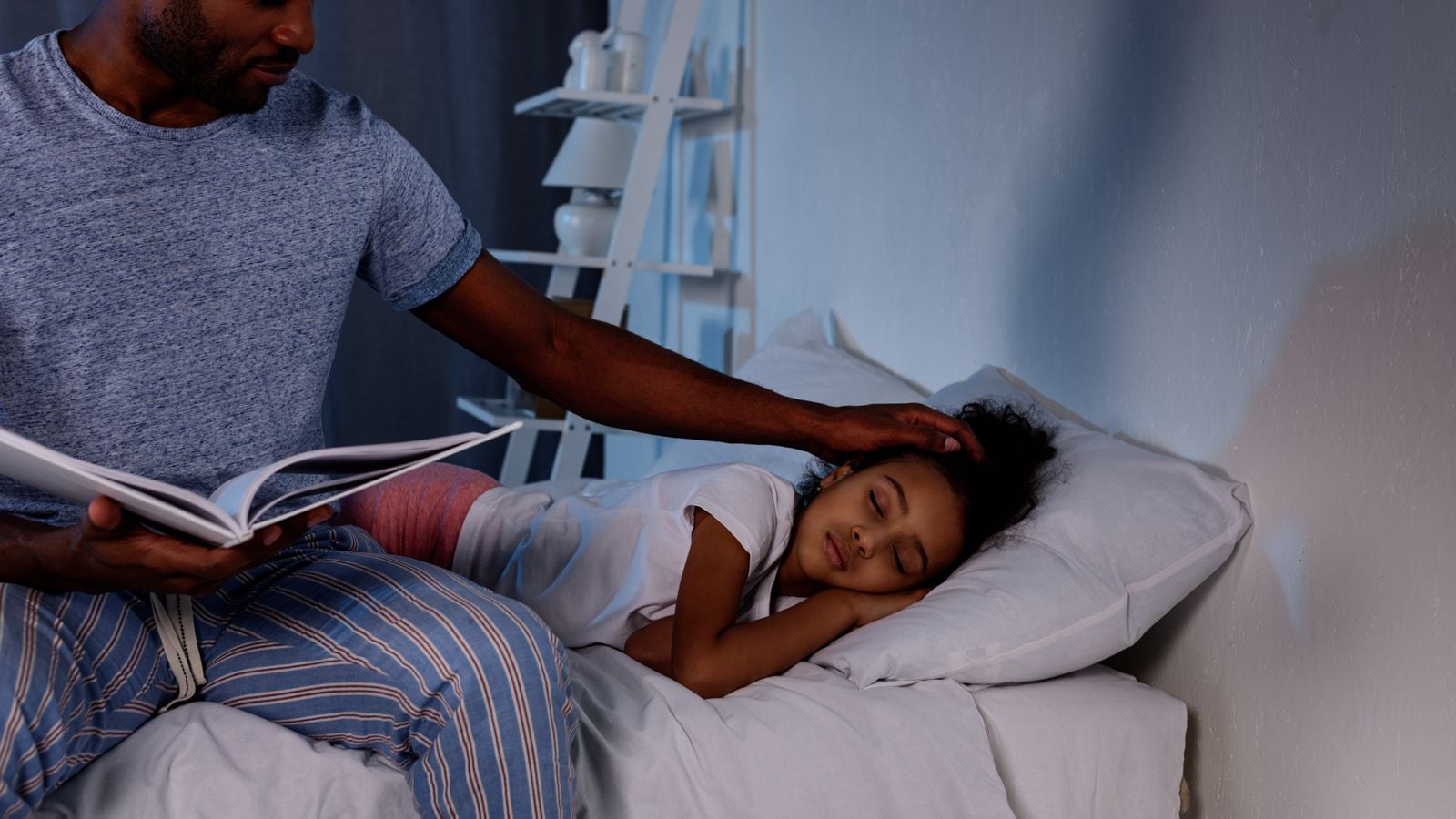
Preventing Sleep Disrupters
Some things have been found to reduce the number or severity of sleep-disturbing episodes. They are all based on good sleep practices and worth a try:
- Follow a calm, peaceful routine the hour before bedtime.
- Maintain the same bedtime seven days a week.
- Avoid books and movies that frighten your child.
- Have your child take a daily nap.
- Provide your child with a light snack an hour before bedtime, avoiding spicy food, sugar, or caffeine.
- Have your child use the potty just before she gets into bed.
Is there a time to call a professional? Always call a professional if you have concerns about your child’s sleep.
Excerpted with permission by McGraw-Hill Publishing from The No-Cry Sleep Solution for Toddlers & Preschoolers (McGraw-Hill 2005) https://elizabethpantley.com/