

Walk down the corridor of any junior high or high school today, and you are bound to see clusters of stick-thin youngsters “sprayed” into skin-tight clothing, some showing the skin of a pancake-flat belly. Their shoes elevate them high off the ground in an effort to accentuate the very long, very lean look. These figures are reminiscent of the Barbie dolls so many of them played with not too many years before. When I grew up as a youngster in the 1950s, dolls were basically of two types; there were baby and toddler dolls, the ones that little girls nurtured and cared for, emulating and role modeling after their own mothers as they practiced becoming compassionate and giving adults one day. The other category included dolls from around the world, bedecked in the costume of her country, the representative of a culture.
Barbie holds the distinction of being the first doll to become an adult figure in the child’s life, needing precious little in the way of caretaking from her child owner. She became an icon, a role model, a figure to be emulated and revered, transforming the child’s role of caretaker to one of the passive bystander and observer of a creature who had made it in life and had it all. She would ultimately become representative of our own culture. Mothers, as well as their daughters, took in Barbie’s messages about how shape and size matters at the very brink of our society’s revolution for women who were becoming liberated, entering the professions in greater numbers, becoming divorced, participating in the sexual revolution, blending families, and abandoning mealtimes and family rituals in favor of workforce and the work out. Barbie, along with England’s Twiggy in the ’60s, led the way to create what was to become the new standard of beauty in the female figure.
If she were alive, Barbie would be a woman standing 7 feet tall with a waistline of 18 inches and a bustling of 38-40. In fact, she would need to walk on all fours just to support her peculiar proportions. Yet media advertising, television, and Hollywood would reinforce her message, influencing what would become the American ideal of beauty. By the time a girl is 17 years old, she has received over 250,000 such commercial messages through the media. Body image disturbances, typically the result of such exposure, are clearly dangerous to our youth not just because their preoccupation precludes clarity of thought, the ability to concentrate and learn, and attaining the developmental milestones of childhood, but also because they typically lead to the fear of being overweight, and therefore to dieting and food restriction, to becoming malnourished and/or excessively thin, and ultimately to the onset of clinical eating disorders. Eating disorders are the most lethal of all of the mental health disorders, killing or damaging 6-13% of their victims, 87% of whom are under the age of 20.
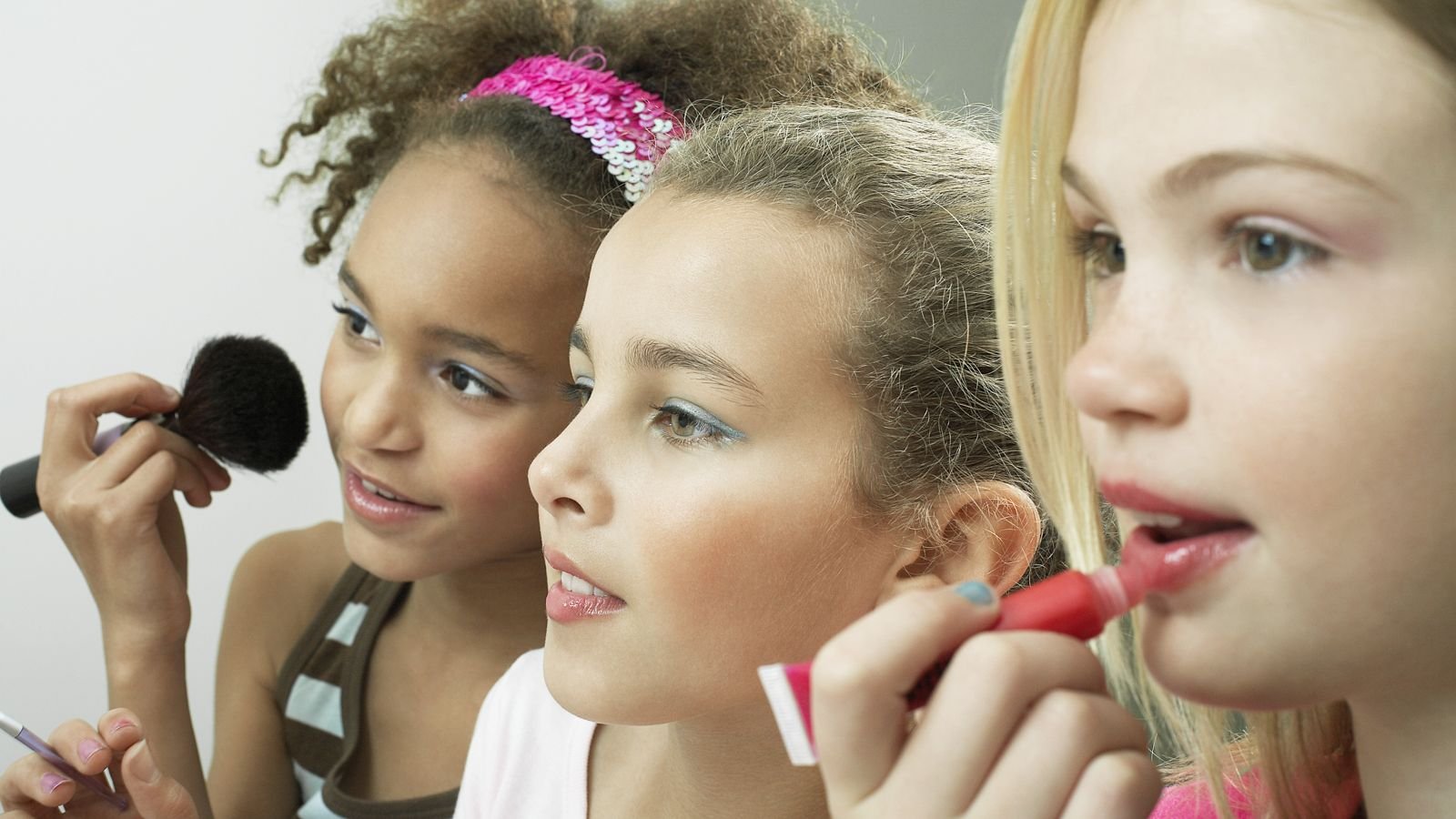
Do Barbie and the Media Influence Kids' Self Images?
Undoubtedly. Our kids are a generation that has been brought up watching the emaciated stars of Hollywood and television sitcoms. 65% of American youngsters have their own TV in their bedroom, with unlimited access to view influences that are less than healthy. Too many kids grow up believing that what they see on the screen is what women and girls are supposed to look like. And America is not alone. During the last decade, a study by Dr. Anne Becker in the Fiji Islands showed that when television first came to that part of the world, airing shows such as Melrose Park and 90210, there was an appreciable increase of anorexia and bulimia among this country’s women and girls, where before, the diseases had been virtually non-existent.
Statistics have shown that 50% of ads in teen girl magazines and 56% of TV commercials aimed at female viewers used beauty as a product appeal. In a recent survey by Teen People magazine, 27% of girls affirmed that the media pressures them to have a perfect body. 68% of girls in a study of Stanford undergraduates and graduate students felt worse about their own appearance after looking through women’s magazines. The number one wish for girls 11 to 17 is to be thinner. Girls as young as age 5 have expressed fears of getting fat. In a survey of elementary school students, girls commented that they would prefer to live through a nuclear holocaust, lose both of their parents, or get sick with cancer rather than be fat. 80% of 10-year-olds have been on diets. Of these, less than twenty percent are actually overweight. A 1984 study (Rodin, Silberstein, and Striegl-Moore) found that children view good-looking peers as smarter and friendlier than unattractive peers…and assume them to be happier and more successful.
The Internet too has become a major source of influence for our young women. Controversial pro-anorexic web sites proliferate throughout the Internet, despite the campaign to have them removed from the larger search engines. The pro-anorexia sites are places which motivate and instruct viewers how to become the best anorexics they can be. A number of my eating disorder patients have admitted that these sites were the trigger or inspiration for bad eating habits, bad attitudes, and body image concerns to cross the line into clinical disease. Is every thin youngster anorexic? No. Is every thin youngster who got to be that way through dieting or restricting food a candidate to develop anorexia? Yes.
Parents Do Make a Difference
At the same time that our media is influencing our youth, even more significantly, it is also influencing their parents. In the end, little girls grow up to become women and mothers of their own little girls. Many parents struggle with their own dysfunctions around body image and eating. As role models for their youngsters, even healthy, normal women typically experience body image distress today. 75% of normal women think they are overweight. 90% of women overestimate their body size, and 50% of American women are currently dieting.
Adults are every bit as much victims of the pernicious messages sent by the media as are their children. They are witness to fashion models in our society being thinner than 98% of the American public. One study found that 75 percent of women and 54 percent of men are unhappy with their physical appearance and wish their bodies were different. The diet industry in America generates $33 billion annually. With the trendy diets that go in and out of popularity so frequently in our culture, myths and misconceptions about the benefits of diets and restrictive eating abound. Increasingly, adult women admit to suffering from unresolved eating disorders into their 30’s, 40’s, and 50’s. With women increasingly in the workforce and/or at the health club, only 50 percent of American families sit down together at the dinner table these days. Kids are left to fend to themselves when it comes to what, when, and how they eat. At the same time, fast foods have become more available and affordable with obesity on the rise, afflicting one out of three in the U.S. today. Studies show that mothers with their own eating disorders, body image conflicts, and dysfunctional eating habits have children who are more apt to suffer eating problems and depression by the time they reach age five.

Prevention and Solutions Start at Home
The good news, and the bad news, is that the most critical messages our youngsters receive about their body image and their self-worth come not from the media, but from what they see and hear AT HOME. As a psychotherapist specializing in the treatment of eating disorders for the past 34 years, I have treated literally hundreds of families dealing with eating-related and body image problems. Through my work with parents and children, I have seen that parents who maintain healthy attitudes about their own bodies, who model healthy eating behaviors, and who provide nutritious food for their family, preparing, serving, and sitting down to eat meals together with children as frequently as is possible, virtually immunize their child from developing eating problems. Healthy attitudes and eating behaviors, along with healthy problem solving and sound parent/child connections becomes the “vaccine.” When children are raised to value themselves and the importance of making a contribution to the world they live in, when they are taught to recognize feelings and are given permission to express them freely and effectively in the interest of solving problems, they will have no need or incentive to turn to food to do this for them.
When kids require information about healthy eating and body image, they will find it using whatever source is most readily available. Parents need to recognize the power of the example they set, of what they do, and of who they are for their children. Nature abhors a vacuum. If positive messages are not forthcoming from the home, you can rest assured that your child will be looking elsewhere for his or her answers, to peers and to the media, to fill in the blanks. Forewarned is forearmed. Eating disorders are not only curable in 80 percent of cases that are detected early and treated effectively, but they are clearly preventable.
What Parents Can Do To Help Their Children Love Their Bodies
Body size acceptance is not related to weight or actual body size, but to self-esteem and emotional health. The true indicator of a good body image is good self-esteem – not the ability to fit into size 2 jeans.
In an effort to foster self- and body-love, parents should:
- Minimize “diet” and weight talk, an activity that may require parents to take a look at their own eating and exercise rituals, attitudes, and preferences about weight and size.
- Never joke about, tease, or shame anyone because of her weight or size.
- Raise consciousness about the American cultural bias in favor of excessive thinness. Help your child develop immunity to the steady stream of media messages that distort her perspective by countering destructive messages with reality messages.
- Discourage dieting and weight-loss fads. Instead, encourage a wellness lifestyle. If your child wishes to lose weight, encourage her to eat differently, not less.
- Don’t equate thinness with happiness, self-satisfaction, or self-actualization.
- Praise your daughter for what she does, not for how she looks. Do some of those things together with her in quality time.
- Give your daughter a vision of a greater purpose in life that extends beyond herself and her appearance, thereby encouraging her to develop healthy interests and passions. Self-esteem is drawn from productivity and contribution.
- Teach your child that there is no such thing as an “ideal” body. Beautiful bodies come in all sizes and shapes based on each individual’s unique strands of DNA.
- Pay attention to negative comments your child may make about her shape. Even if they are irrational, be empathic, not dismissive, as she feels her feelings deeply.
- Engage your daughter in a discussion about how she thinks she might look better and how a changed appearance might improve her life. How does she plan to accomplish these goals? Engage together in activities that promote accurate, realistic, and meaningful body awareness at more profound levels, teaching her to recognize the connection between body and mind.
- Encourage your child to become aware of her feelings, to own and express them in the interest of resolving problems rather than harboring them in her body.
- Discourage extreme or excessive behaviors of any sort, be they perfectionism, sleeping too much, sleeping too little, shopping too much, or studying too little.
It is important for parents to realize that in order for children to feel attractive and good about themselves, they need to learn to become effective problem-solvers, good communicators, and compassionate people, as well as healthy eaters. As John Muir once said, “When one tugs at a single thing in nature, he finds it attached to the rest of the world.”
About the Author:
Abigail Natenshon, MA LCSW, GCFP is a psychotherapist who has specialized in the treatment of eating disorders with individuals and families for the past 36 years. Natenshon is founder and director of Eating Disorder Specialists of Illinois and is the author of When Your Child Has An Eating Disorder: A Step-by-Step Workbook for Parents and Other Caregivers