
When?
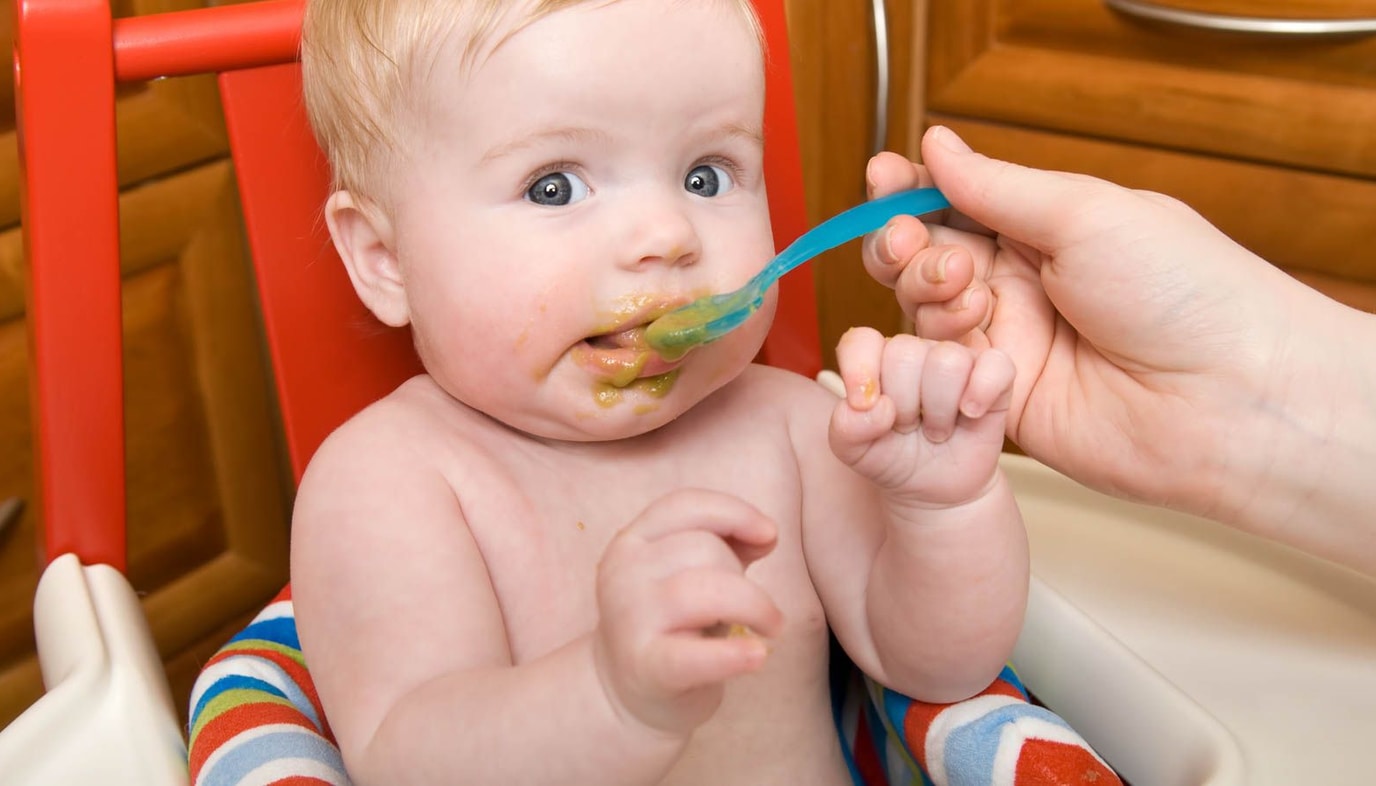
About six months old. Exclusive breastfeeding is recommended prior to six months. An iron-fortified, infant formula is considered the only adequate substitute to breastfeeding by the American Academy of Pediatrics.
How?
Go slowly! There is no need to rush. Use the "One at a time" method for introducing new foods. This method helps detect allergies and eases digestion. Introduce only one new food at a time, and make sure that is the only new food for three to five days. If an allergic reaction occurs, report it to your baby's healthcare provider and remove the food immediately from the baby's diet.
How Much?
Start out with just a few spoonfuls at each meal and learn to take cues from your baby. Breastmilk or formula remains the primary source of nutrition to 12 months, so quantity is not as important as variety.
How Often?
Four to six mini meals per day are recommended, because of small tummies and fluctuating appetites. At each mini-meal, offer small amounts (2 Tbsp/1 ounce) of two to three different kinds of foods.
What?
Baby's first foods include vitamin-fortified cereal that is thinned with breastmilk or formula, and smooth purees of acorn and butternut squash, peas, sweet potatoes, apples, bananas and pears. After the first foods, you can slowly introduce new foods. Here is a list of first foods to introduce by age:
Age | 6-8 months | 8 -10 months | 10 - 12 months | Over 12 months |
PRIMARY NUTRTION SOURCE | Breastmilk or iron-fortified formula | Variety of healthy foods | ||
GRAINS | Vitamin-fortified cereal - rice, barley, oat | Vitamin-fortified cereal - mixed, Graham crackers, Low salt crackers, "O" shaped cereal | Egg-free pasta, Rice | Bread, egg noodles, pasta made with eggs, whole grain crackers |
VEGGIES | Pumpkin, Yellow Squash, Zucchini | Asparagus, Broccoli, Carrots, Cauliflower, Green Beans, Snow Peas, Spinach, Sugar snap peas, White potato | Artichokes, Beets, Corn, Cucumber, Eggplant | Lettuce, Collard greens, Swiss chard |
FRUITS | Apricots, Avocado, Nectarines, Peaches, Plums | Grapes (cut in 1/4's), Mango, Papaya | Cherries, Dates, Cantaloupe, Coconut milk, Melons, Pineapple, Prunes | Berries, Citrus fruits, Kiwi, Tomatoes |
PROTEINS | Chicken, Tofu, Turkey | Beans - pinto, black, white, navy, Lean beef | Lamb, Liver, Egg yolks (fully cooked) | Egg whites, Fish, Nuts - almonds, pecans, walnuts, Seeds - flax, sesame, sunflower |
DAIRY | None | None | None | Milk, Plain yogurt, soft and semi hard cheeses |
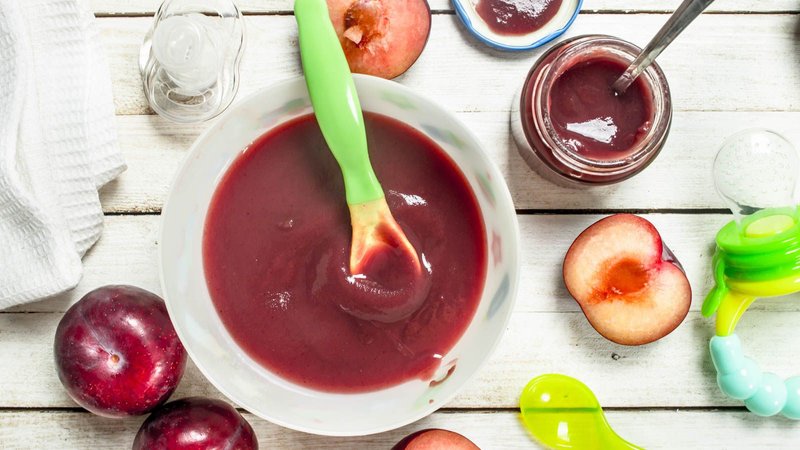
Making your baby's food is fresher, healthier, and less expensive than jarred baby food, and it is a lot easier to make than you may imagine. Using fresh produce, a blender, and set of ice cube trays, you can make food in quantity and freeze it in single servings. Here is a simple and easy recipe for a common first food:
Green Pea Puree
1 ¾ pounds fresh peas OR 24 ounces of frozen peas
Step 1: PREP - Wash and shell peas. Discard pods. If using frozen peas, start at step 2.
Step 2: COOK - Place peas and 2 Tablespoons (30ml) of water in a microwave-safe dish. Cover. Cook six to eight minutes. Let stand for five minutes. They are done if the peas can be mashed easily with a fork.
Step 3: PUREE - Place peas and cooking juices into a blender of food processor. Add 1/4 - 1/2 cup (30-60 ml) of water. Puree. Add additional water, as needed, to develop a smooth texture.
Step 4: FREEZE - Spoon into So Easy Baby Food Trays or ice cube trays. Cover. Place in freezer eight to 10 hours or overnight. Remove cubes from trays, place in storage container or freezer bag, and return immediately to the freezer.
Makes 24, 1-ounce servings. Stays fresh for two months in the freezer.
To serve, select frozen green pea cubes from the freezer, defrost and warm, check the temperature and feed.
About the Authors:
Cheryl Tallman and Joan Ahlers are sisters, the mothers of five children, and founders of Fresh Baby (www.FreshBaby.com). Raised by parents who love fresh foods and entertaining, their mom, a gourmet cook, ensured that they were well-equipped with extraordinary skills in the kitchen. Both with long track records of business success, they decided to combine their skills in the kitchen with their knowledge of healthy foods and children to create Fresh Baby. Cheryl and Joan put a modern twist on the conventional wisdom that when you make it yourself, you know it's better. Their goal at Fresh Baby is to make the task of raising a healthy eater a little bit easier for all parents. Fresh Baby's breastfeeding accessories and baby food making supplies provide parents with practical knowledge and innovative tools to support them in introducing their children to great tasting, all-natural foods - easily and conveniently. Visit them online at www.FreshBaby.com and subscribe to their Fresh Ideas newsletter to get monthly ideas, tips and activities for developing your family's healthy eating habits!